
VR experiences for trade shows, events and training
3D product tours, interactive walls and gamification
3D hologram display and stage solutions
What Is Experiential Marketing? How to Apply It at Trade Shows
What is experiential marketing and how is it used at trade shows? Learn how to enhance the trade show experience with VR, hologram, LED screen and interactive stand solutions.
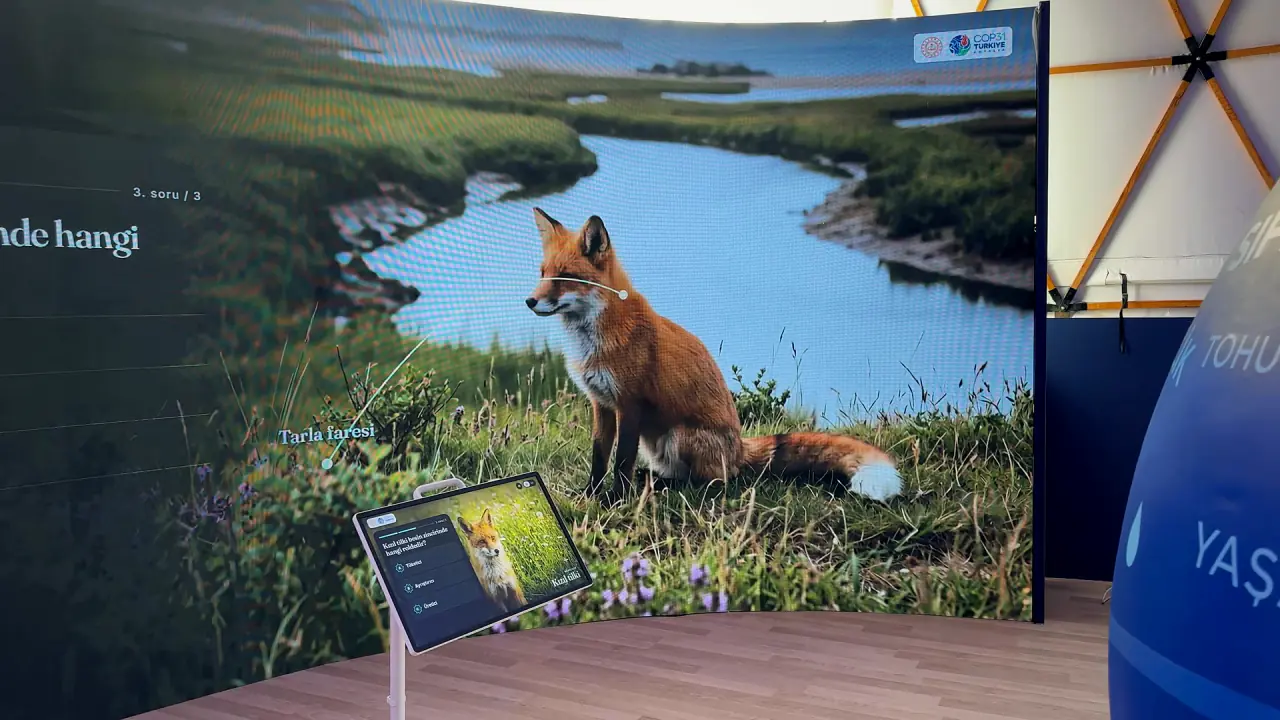
The difference between a visitor walking past a stand and stepping inside often lies in the experience built there. Experiential marketing finds its expression on the trade show floor through a wide range of applications, from VR scenarios to hologram cabins and from LED surfaces to interactive kiosks. In this guide, we look at how these applications are reflected in the stand investment and where the decision points become clear for teams planning a trade show budget.
What Is Experiential Marketing?
Experiential marketing is an approach based on letting visitors experience a product rather than describing it to them. Referred to in the international literature as “experiential marketing”, this discipline has developed as a separate line of expertise in retail and events. While the traditional advertising model delivers the message as a ready-made package, this approach leaves room for participants to discover the message through their own actions. This is where the difference in perception comes from between someone reading a machine's catalogue and someone walking around inside that same machine virtually. Instead of claiming the product's technical superiority, the brand lets people feel it directly. The emotional component of the purchase decision is shaped at exactly this moment of contact, and the brand image settles into a lasting frame.
Core Principles of Experiential Marketing
Even as the technology changes, effective trade show experiences rest on similar principles. You can consider these four principles to evaluate the impact of an experience at a trade show stand on visitors:
Sensory interaction: Engaging sight, hearing and touch at the same time encodes the message far more strongly than single-channel communication.
Emotional connection: Emotions such as curiosity, admiration or surprise set the brand apart from neutral information and give it a separate place in memory.
Active participation: When visitors move from being spectators to taking a role inside the experience, contact time and the quality of attention increase.
Memorability: A lived moment is carried longer than a sentence that was read, and it acts as a natural reminder in post-show meetings.
Experiential Marketing vs Traditional Marketing
The difference between experiential and traditional marketing shows up not only in the tools used but also in the visitor's role in the process. The key differences between the two approaches are:
Criterion | Traditional Marketing | Experiential Marketing |
Direction of communication | One-way transmission | Two-way interaction |
Visitor's role | Passive recipient | Active participant |
Delivery of the message | Told and shown | Experienced and discovered |
Contact time at the stand | Measured in seconds | Measured in minutes |
Feedback | Postponed until after the show | Observed instantly |
Measurement | Number of brochures and business cards | Interaction data and session records |
Cost structure | Printing and recurring production | One-off production, multi-year use |
Why Is Experiential Marketing Important at Trade Shows?
The trade show floor is a natural laboratory for experience-driven concepts. Visitors have already come with purchase intent, set aside their time and are ready to compare competing stands in the same aisle. According to data from the Union of Chambers and Commodity Exchanges of Türkiye (TOBB), 289 trade shows are being held across the country in 2026, 96 of them international. At this density, standing out does not come from adding square metres but from the quality of the contact created within them.
Capturing Visitor Attention
In a crowded aisle, visitors decide within seconds which stand to head for. Similar colour palettes, similar concepts and similar product tables leave this decision to chance. A moving visual surface, a small queue at the start of a VR session or the curiosity created by a hologram are the elements that physically stop attention. This is also why the experience concept stands out among the ways to attract attention at a trade show stand. Once attention is captured, starting a conversation becomes much easier.
Increasing Brand Recall
What stays in a visitor's memory after a trade show is less the hundreds of visuals they saw than the few moments they experienced. While the pages of a catalogue blur together, a production line walked through in a virtual environment is encoded as a separate memory. Brand experience design therefore directly affects recall rates. When the sales team calls two weeks later and the visitor opens with "I tried that experience at your stand", the tone of the conversation changes from the start and the feeling of a cold call disappears. Photographing and sharing the experience adds another layer that carries the same recall beyond the stand.
Improving Lead Quality
A visitor who spends five minutes on an experience is at a different level of intent from one who picks up a brochure and moves on. Interactive applications make this distinction on their own and direct the stand team's energy to the right people. Session durations, completed scenarios and preferred content topics produce concrete signals for qualification once they are recorded. Not collecting these signals at all is one of the mistakes made in trade show participation. Short observation notes taken by the stand team during the experience complement this data on the qualitative side.
Experiential Marketing Technologies Used at Trade Shows
The choice of technology is shaped by the product's characteristics and how long visitors will spend at the stand. In the 36th edition of the UFI Global Exhibition Barometer, increasing interaction and engagement is among the leading priorities in developing exhibition formats. For this reason, when evaluating trade show technologies, installation time and fit with the stand design should be considered alongside the budget.
Virtual Reality (VR) Stand Applications
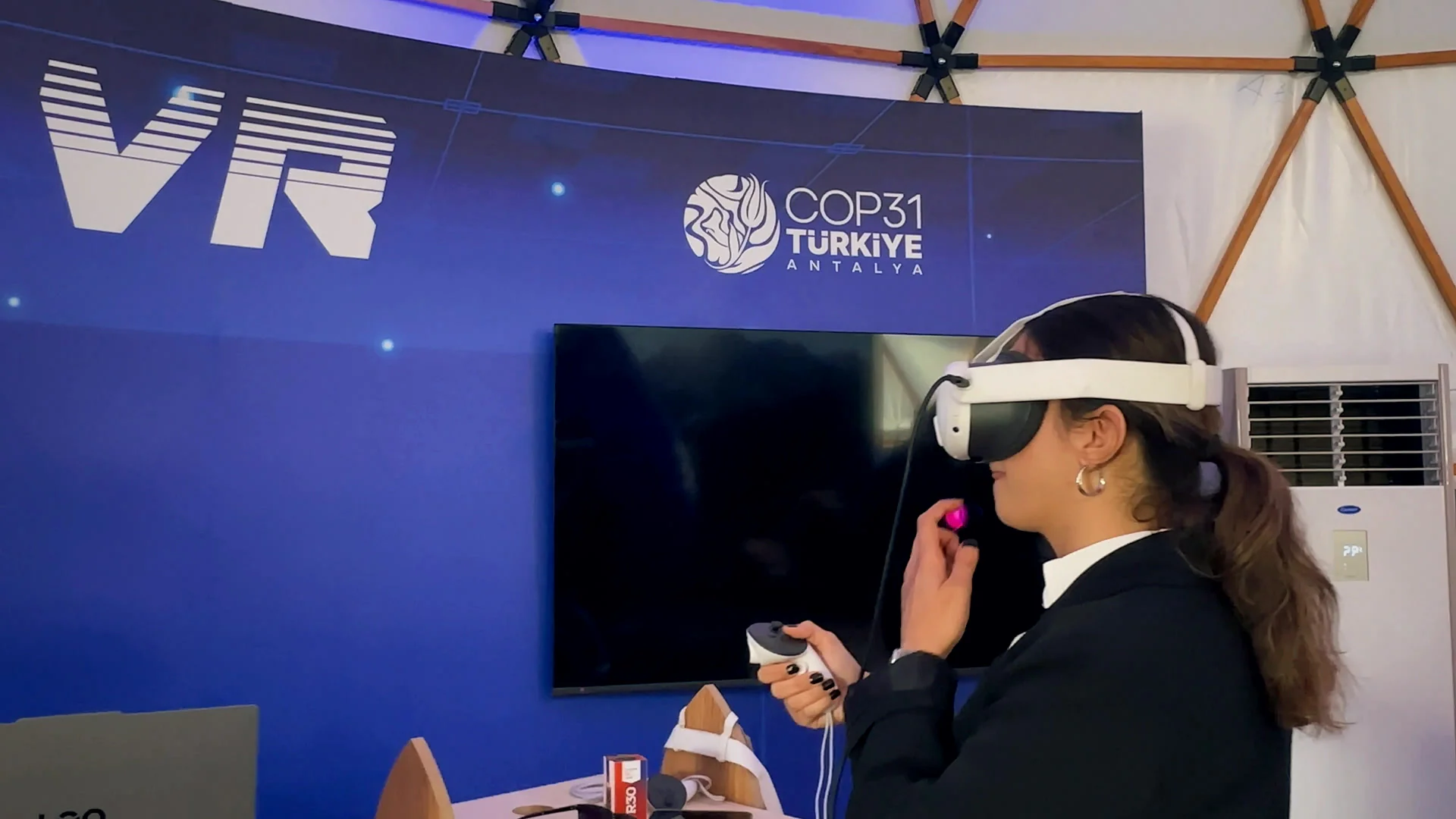
VR makes it possible to bring everything that won't fit into a trade show to the trade show. A production facility, a construction site or a ship's deck becomes accessible within seconds to a visitor who puts on a headset. Scenario design is decisive here: rather than an aimless walkthrough, a three-minute structured flow that shows what makes the product different is far more effective. VR and AR solutions require handling the content and hardware sides of this flow together. Planning the number of headsets according to visitor density is also a practical detail that prevents queues from forming. Among VR trade show experiences, factory tours, product simulations and training scenarios stand out as the three most frequently chosen formats.
Augmented Reality (AR) Experiences
AR doesn't remove the physical product; it adds a layer of information on top of it. When a visitor points a tablet at a machine, the internal components become visible, flow diagrams come to life and the technical explanation gains a visual counterpart. Interactive versions of catalogues work on the same logic. Using AR at a trade show stand opens up a practical solution, especially for companies that can bring their product to the stand physically but cannot open it up to show the inside. Projection-based concepts, meanwhile, create a natural interaction layer in interactive trade show stand design that requires visitors to use their hands.
LED Screen and Video Wall Solutions
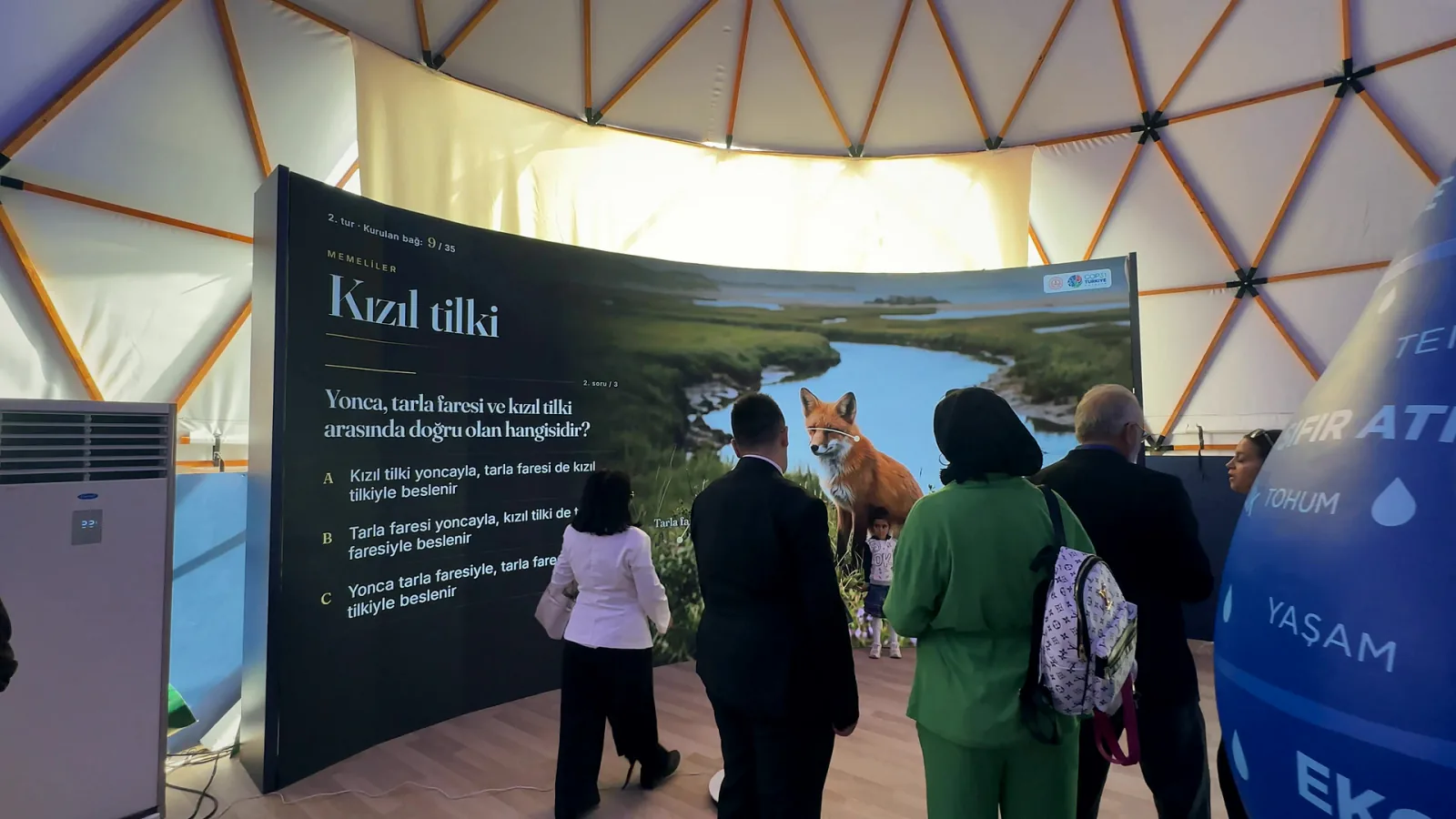
Large-format visual surfaces are the most direct way to be noticed from a distance. A moving visual seen from the other end of the aisle draws visitors towards the stand and initiates the first contact. In an LED screen setup, content rhythm is as decisive as screen resolution; the pixel pitch chosen according to viewing distance determines the sharpness of the image. In multi-screen setups, video wall structures create large surfaces that blend into the stand's architecture.
Hologram and 3D Visualisation
Hologram applications instantly spark curiosity at the stand by making the product appear to float in mid-air. While hologram fan systems can be installed even in small spaces, hologram cabins create a more controlled and impressive stage. Hologram solutions are especially preferred in scenarios where the product is presented in rotation and technical details are revealed through visual layers. Product animation content can also be used directly in these systems. Because they need a dark background, the position of hologram units within the stand has to be planned together with the lighting plan.
Interactive Kiosks and Touchscreen Applications
Kiosks create a self-service layer that keeps visitors from being left unattended when the stand team is busy. The product tree, technical documents, reference list and price request form are gathered on a single screen. The real value of touchscreen kiosk applications, however, lies in the data: how many times each product page was opened, which document was downloaded and which form was filled in are all recorded. These records set the priorities of the post-show communication plan.
Experiential Marketing Tips for a Successful Trade Show Experience
For an experiential marketing investment to pay off, the technology needs to be supported by the right concept, a clear message and an effective follow-up system. You can explore the three key points to consider in pre-show planning under the headings below.
Know Your Target Audience
The technical manager who makes the purchase decision and a group of students curious about the stand do not take away the same thing from the same experience. Persona work determines the length, language and technical depth of the scenario from the outset. A short, dense flow built on the assumption that the decision-maker will not spend more than three minutes achieves more than a long narrative prepared for a general audience. Once the target audience is clear, content production costs are also freed from unnecessary scope.
Integrate the Technology with Your Message
When an impressive visual show doesn't carry the brand message, all that stays in the visitor's mind is the show. This is where it becomes clear that technology is a tool, not the goal. When the scenario is built on a single claim that differentiates the company, the experience and the sales conversation speak the same language. When choosing among trade show stand presentation techniques, the criterion is the capacity to carry the message as much as the visual impact. Planning the trade show stand design and the content scenario at the same table eliminates mismatches between screen positions and visitor flow from the start.
Set Up a Data Collection and Follow-Up System
The real value of a trade show emerges in the follow-up process after the event. If a visitor's contact details, the experience they took part in and the product group they are interested in are not recorded together, follow-up work with potential customers does not progress efficiently. Kiosk forms, QR-based registrations and VR session records allow this data to be collected automatically. The four key data points to consider when prioritising after the show are:
Session duration: The minutes spent in the experience are the most direct indicator of the visitor's depth of interest.
Completion rate: Whether the scenario was watched to the end also provides feedback on the content's pacing.
Content preference: The product group or industry scenario chosen determines which topic the conversation will open with.
Form conversion: Contact details left after the experience are the most heavily weighted signal in qualification.
A ranked list handed over to the sales team at the end of the show ties the trade show investment to a concrete pipeline.
VR-Focused Trade Show Stand Projects for Experiential Marketing
VR scenarios solve different problems depending on the industry. What they have in common is making a reality that cannot be physically brought to the trade show accessible inside the stand.
Industrial Manufacturing: Virtual Factory Tour
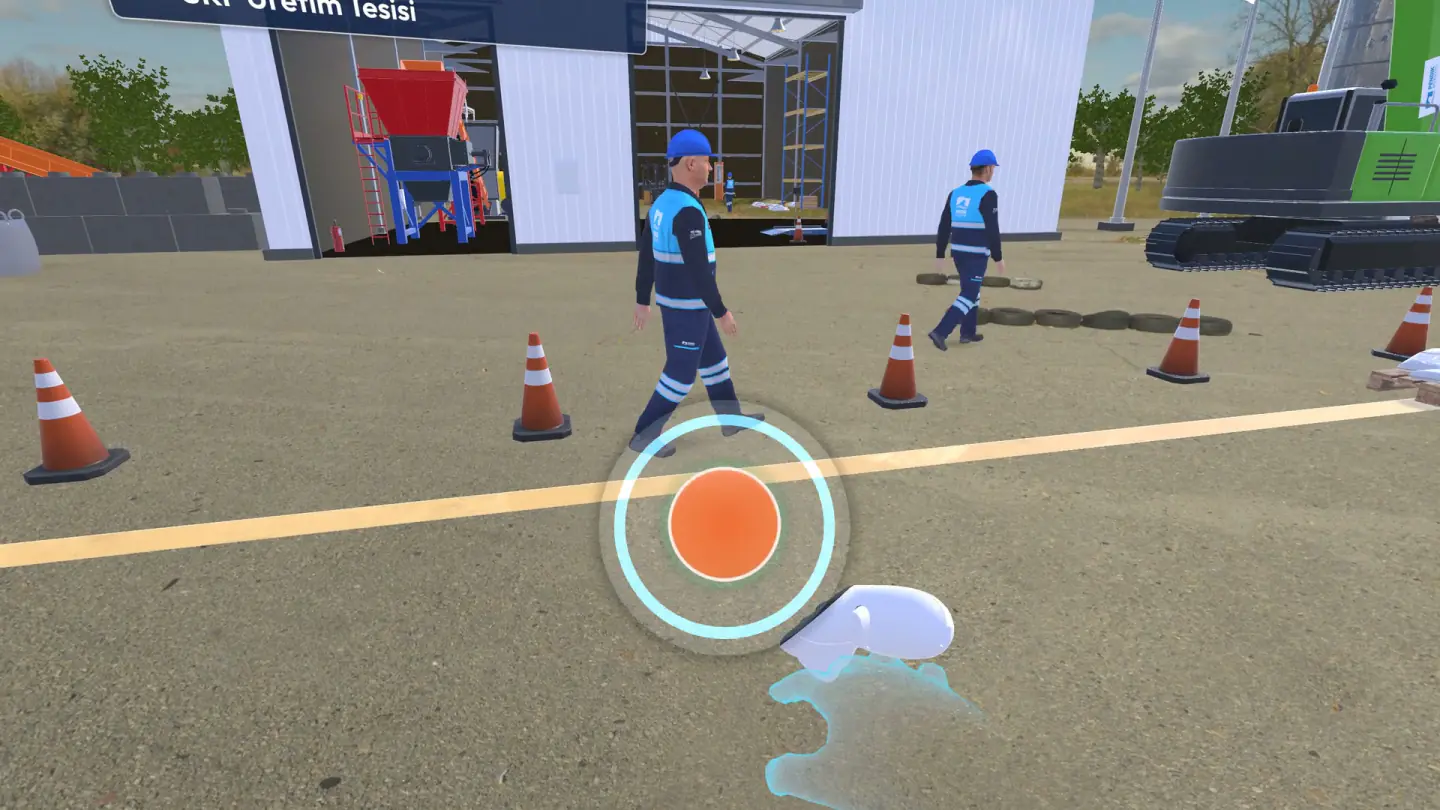
A production line weighing dozens of tonnes won't fit on any stand. A VR-based factory simulation places visitors at the head of the line and lets them follow the process step by step. The flow, from raw material intake to packaging, is opened up with cutaway views, creating moments where technical superiority becomes visible. This concept also allows several people who make the investment decision together to share the same reference. For buyers planning to travel to see the facility on site, the decision process is noticeably shortened as well.
Construction and Real Estate: Virtual Site Tour
Selling a project whose foundations have only just been laid becomes difficult when it is left to the imagination. When a flat is toured in its finished state in a VR environment, presented together with its view and a daylight simulation, the decision process speeds up. Architectural animation content forms the visual infrastructure of this scenario, and the same material can be converted into a 360-degree virtual tour format for use in the sales office as well.
Automotive: In-Car Experience Simulation
Bringing a vehicle to the exhibition floor requires logistics costs, space allocation and installation time. A VR simulation, on the other hand, lets visitors look from the driver's seat and experience interior quality, ergonomics and control layout. Because different trim packages can be swapped within seconds, multiple configurations can be shown in a single session. This makes it possible to showcase a wider product range while using less physical space. Built on a single scene, this experience can also be reused for different model launches.
Healthcare and Medical: Device Usage Training
Trying out medical devices at a trade show is limited for reasons of hygiene and certification. A VR-based training scenario allows physicians to use the device step by step and offers a safe environment where mistakes can be made. Supported by medical animation content, this concept makes the device's effect inside the body visible and takes the technical sales conversation onto entirely different ground.
Frequently Asked Questions About Experiential Marketing
Can experiential marketing be done on a small budget?
It can be applied at a smaller scale. A single-headset VR station or a single touchscreen kiosk can be set up on a significantly lower budget than multi-screen setups. What matters is not the amount of equipment but the clarity of the scenario. A single strong scene generates more contact than several loosely designed stations.
How much stand space does a trade show VR experience need?
For seated scenarios, an area of two square metres is sufficient in most cases. For setups that involve moving around while standing, planning four to six square metres including a safety margin also eases visitor circulation. If the number of headsets increases, setting aside a few extra square metres for a waiting area keeps the flow intact.
How is the ROI of experiential marketing measured?
Measurement is built on target metrics defined before the show. The number of visitors who take part in the experience, the session completion rate, the number of contact details collected and their conversion rate into the sales pipeline are the four key indicators. Reusing the produced content at later events also enters the calculation, as it spreads the total cost over years. Attributing deals closed in the first ninety days after the show to the experience at the stand puts the picture on a concrete footing.
Blog
All posts→



Your next project
Let's build
together.