
AI-assisted, fast and scalable video production
VR experiences for trade shows, events and training
Touchscreen kiosk software and hardware
3D hologram display and stage solutions

Using Augmented Reality (AR) at Trade Show Booths
Explore the advantages, scenarios and production process of using augmented reality (AR) at trade show booths. Increase engagement with your products.
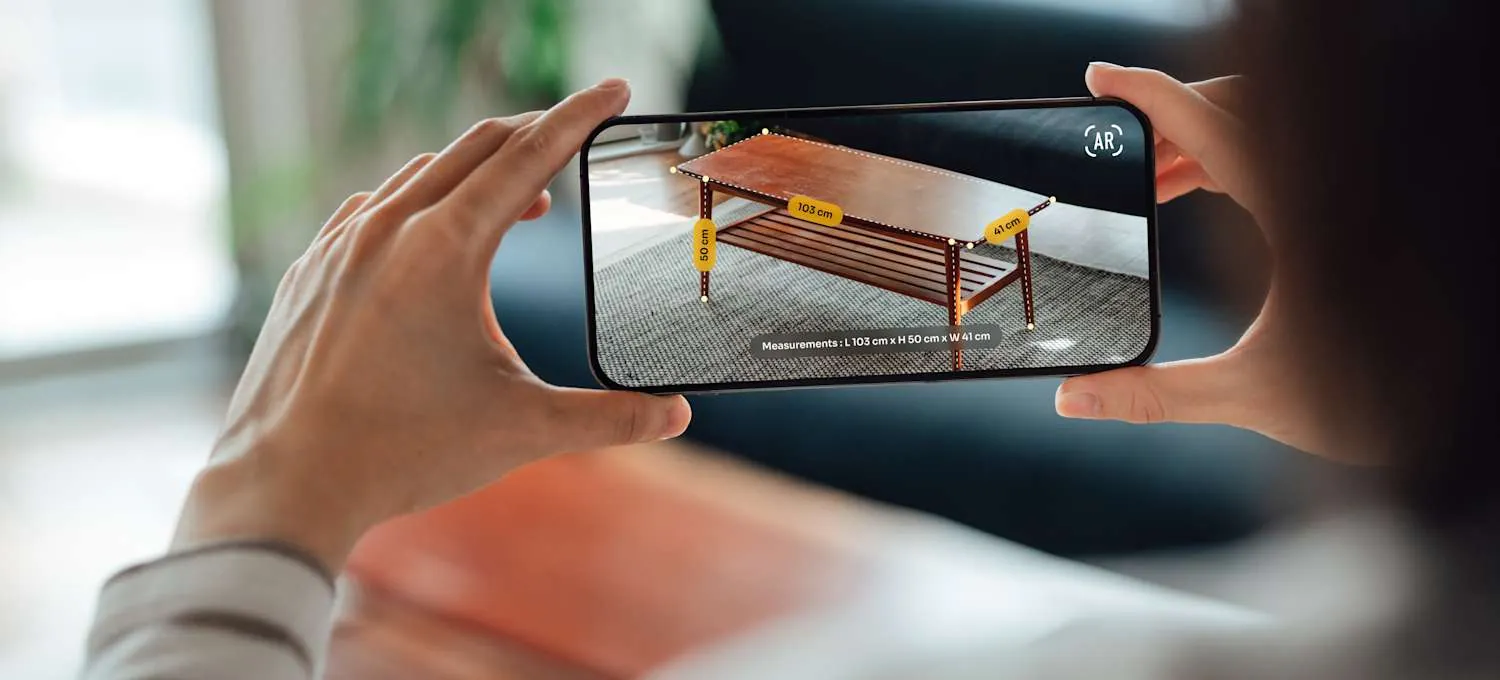
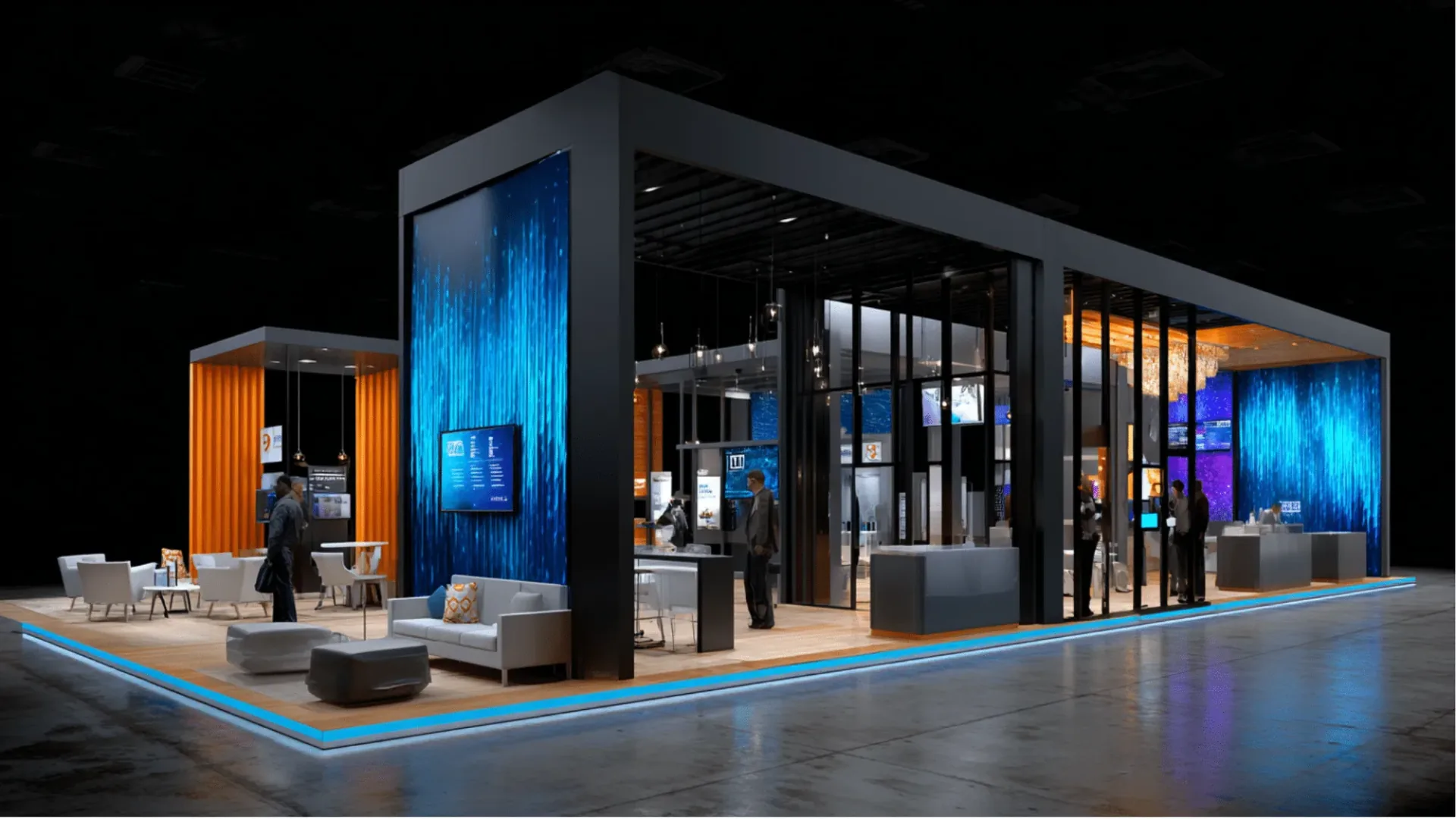
One of the most innovative ways to showcase products at trade shows is augmented reality (AR) technology. Using AR at a trade show booth combines the physical world with digital elements, giving visitors an experience that is both real and virtual. In this way, products are presented in a far more impressive, understandable and memorable way.
What Is AR Use at a Trade Show Booth?
Augmented reality is a technology that overlays three-dimensional models, animations and layers of information on top of the real image seen by the camera. This is where it clearly differs from virtual reality: the visitor does not lose touch with the world, stays inside the booth, keeps the conversation going and looks at the same image together with the sales team.
Trade show augmented reality applications are usually built with one of three technical approaches. Marker-based solutions recognise an image printed on a booth panel or a catalogue page and launch the model at that point. Solutions that use spatial tracking detect the floor and walls and place the model at its real scale. Web-based AR, meanwhile, runs in the browser and removes the app download step. Which approach AR and VR solutions are built with is determined by the booth's traffic and the nature of the product.
Displaying Products Digitally
It is not always possible to bring large or hard-to-transport products to the booth area. With AR, visitors can view the product's 3D model using their phones or the booth screens; this makes it possible to present the product in detail without bringing it to the show. Items such as shipping costs, the load capacity of the hall floor and installation time are thus taken out of the equation.
The advantage of digital display is not only logistical. While a physical sample represents a single configuration, a digital model contains every variant; colour, size and equipment options can be changed within seconds. A prototype that has not yet been manufactured can be displayed in the same way, making it possible to collect feedback before launch. The assets prepared in product animation production form the direct input for this scenario.
The Chain from CAD Data to an AR Model
The product's digital twin is born from engineering files, but those files are not suited to real-time use. The typical workflow followed by teams working to a trade show schedule may look like this:
Cleaning up the CAD data: Engineering files contain millions of polygons and cannot be opened directly on a mobile device.
Retopology and optimisation: The model is lightened in a way that preserves visual fidelity; detail is transferred to normal maps.
Material and lighting work: Metal, glass and painted surfaces are adjusted so that they also read well under hall lighting.
Interaction design: It is determined which gesture will trigger what and how feedback will be given.
Field testing: The experience is tested on real devices and in lighting conditions similar to a trade show. An application that works flawlessly on an office desk may struggle to recognise markers under bright spotlights.
Preparing Interactive Presentations
With AR applications, visitors can go inside the product's components and see its working principles in detail. For example, the parts of an engine can be separated one by one to show visitors how it works; this makes technical information understandable and visual. An explanation that takes up a few paragraphs on a catalogue page turns into a thirty-second observation.
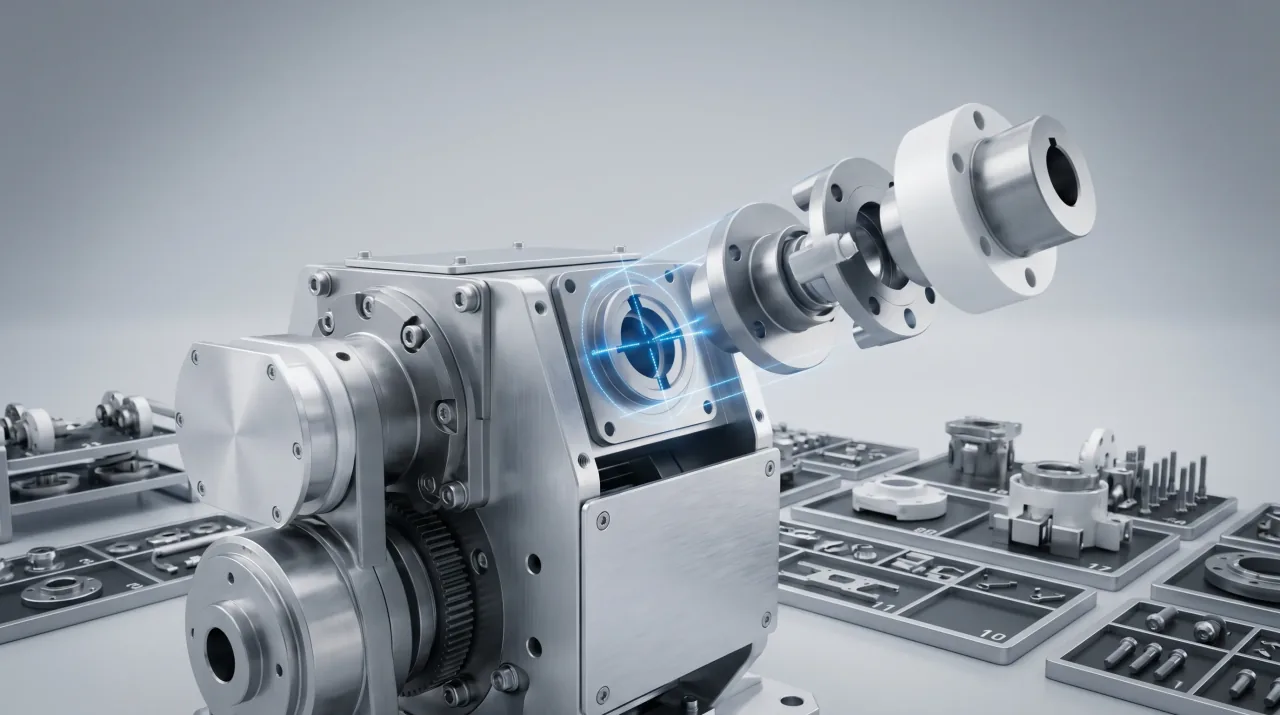
Because this approach makes technical information language-independent, it gains additional value at international trade shows. Instead of texts that require translation, the movement itself tells the story; the visitor follows with their own eyes which channel the fluid passes through or the moment a safety mechanism kicks in. Interactive presentation set-ups also lighten the load on the technical team at the booth.
Scenarios and What They Communicate
Not every product requires the same AR set-up; the nature of what needs to be explained determines which scenario is chosen. The scenarios most often encountered in the field can be compared in the table in terms of suitable product type, the interaction the visitor performs and the typical interaction time:
Scenario | Suitable Product Type | What the Visitor Does | Typical Duration |
Real-scale placement | Heavy machinery, generator, cabin, architectural structure | Places it on the floor and walks around it | 30-60 seconds |
Exploded view | Engine, pump, medical device, module | Separates the parts and examines them layer by layer | 60-120 seconds |
Cross-section and flow explanation | Filter, heat exchanger, line equipment | Opens the cross-section and follows the path of the fluid | 45-90 seconds |
Configurator | Furniture, cabin, product with colour and variant options | Changes variants and tries combinations | 90-180 seconds |
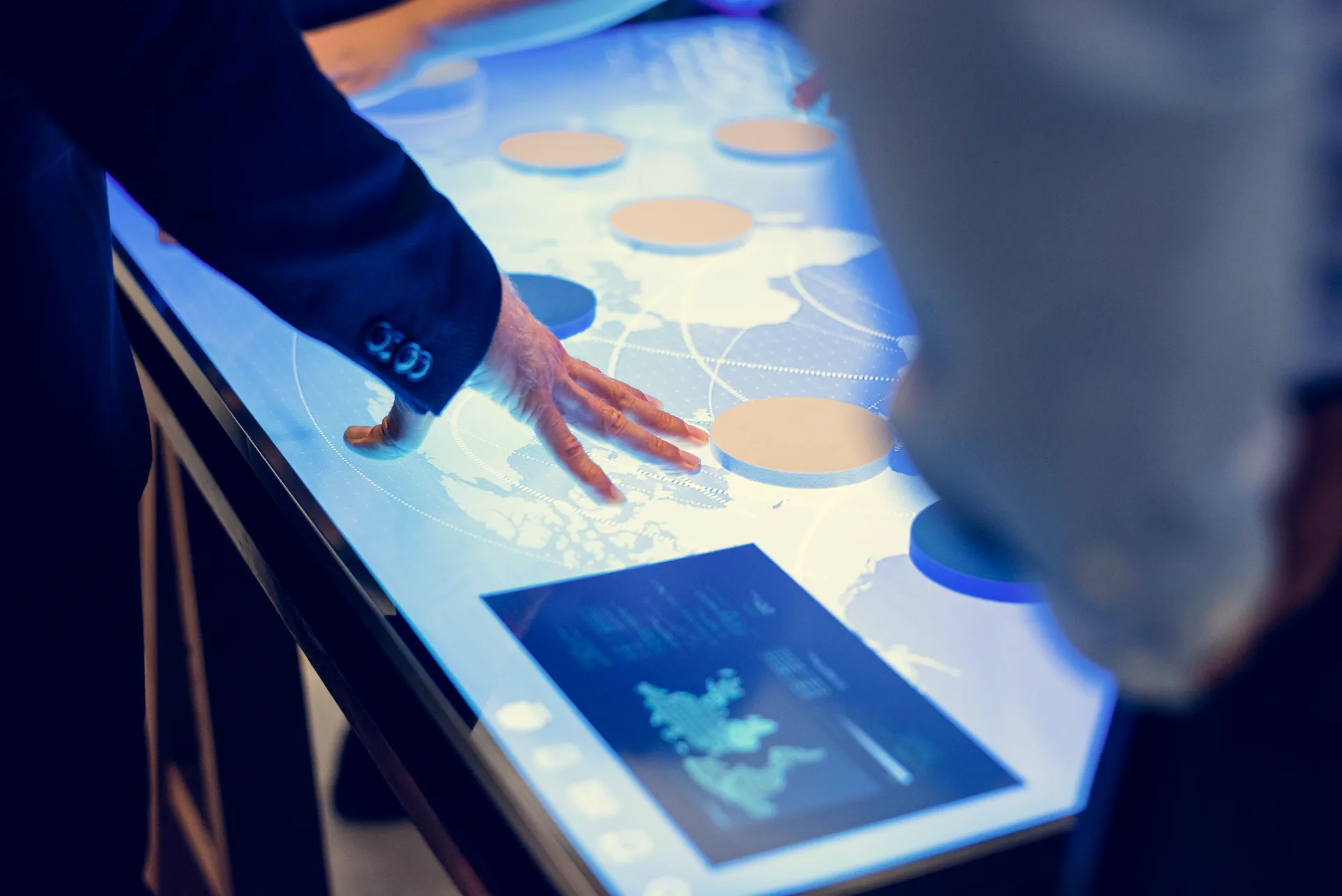
In a crowded hall, a scenario lasting more than three minutes risks losing the visitors waiting in line; for this reason, long explanations are usually left to fixed stations such as a touchscreen kiosk, while short and striking ones are left to mobile AR.
Constraints Encountered in the Field
A trade show hall is not a controlled studio, and experience design needs to accept this fact from the outset. The visitor is standing, has a catalogue in hand, background noise is high and attention span is limited. In these conditions, set-ups that rely on spoken narration mostly do not work, and visual and textual cues come to the fore.
The internet connection is a separate risk item. Hall networks slow down at the hours when thousands of devices connect at the same time; for this reason, delivering experiences on tablets with locally installed content, or aggressively shrinking model files, is preferred. Among the mistakes made in trade show participation, relying on the connection is one of the most common reasons a technology investment fails to gain visibility.
Increasing Visitor Engagement
When visitors can interact with the product through AR technology, they stay at the booth longer. Touching, rotating and examining instead of just watching makes the trade show experience far more enjoyable; the person who opens the product's cross-section with their own gesture is no longer the one watching the presentation but the one directing it, and this difference works directly on recall.
The ubiquity of the technology is feeding this expectation.
The global AR and VR market's projected revenue for 2026 stands at 50.9 billion dollars, and the same forecast puts user penetration at 54.9 percent. Broader analyses, meanwhile, place the size of the augmented reality market in 2026 at 170 billion dollars. The visitor already knows that the device in their pocket can handle such an experience.
Among the methods that increase visitor engagement, what sets AR apart is that the experience can be carried over to the visitor's own device. Even after leaving the booth, the link stays in hand and a natural channel is created for post-show follow-up.
Marketing and Brand Image
Companies that use AR solutions create a modern and innovative brand perception among visitors. Positioning yourself as a company that invests in technology, in particular, makes a difference among competitors; among dozens of exhibitors displaying similar products in the same hall, this perception also positively influences assumptions about product quality.
The booth itself thus becomes an indicator of engineering competence. The visitor assumes that a company able to explain its product with this clarity manages its production processes with the same rigour, and the conversation begins on a footing of technical trust.
Choosing Between AR, VR and 3D Animation
Booth technologies are not alternatives to one another but tools for different tasks. Augmented reality keeps the visitor inside the booth and brings the product into the space; virtual reality, on the other hand, takes the visitor to another place, usually the production facility, and offers a deeper but more isolated experience.
The use of animation at trade show booths, meanwhile, provides a narrative that requires no interaction, runs in a continuous loop and can be watched from a distance. Strong booth set-ups usually combine all three in layers: the animation looping on the screen attracts attention from afar, AR engages the approaching visitor and virtual reality deepens the qualified conversation.
Flexible Use
AR content can be used not only at trade shows but also in sales offices, showrooms or on mobile devices. In this way, the content prepared can be put to use in different areas over the long term, and an investment that seems to have been produced for a single event turns into a storytelling asset that works all year round.
Optimised models and interaction set-ups are used as resources in dealer training, on e-commerce pages, in technical documentation and in the next season's catalogue. The visual materials the sales team uses in the field are also fed from the same model library; in trade show and exhibition projects, this inventory approach noticeably shortens production time for the second and third events.
Sector-Specific Uses
The areas where trade show booth augmented reality solutions find a response widen in direct proportion to the product's portability and complexity. The most common forms of explanation by sector are:
Machinery and industry: Showing the inner workings of heavy machinery; by making the body transparent, the need for an industrial presentation is met without a physical sample.
Medical: Explaining the usage scenarios of medical devices in a digital environment; medical visual explanation thus stays within ethical boundaries.
Construction and real estate: Displaying projects at their real dimensions; floor plans open up layer by layer on top of the model table.
Consumer products: Letting visitors experience electronic devices or furniture virtually; the visitor places the product in their own space.
Defence and aviation: Systems that cannot be brought into the hall because of their scale or level of confidentiality are displayed digitally in defence and aviation presentations.
Make Your Booth Innovative with AR at Your Trade Show Booth
Augmented reality gives visitors the opportunity to get to know products more closely, see their details and interact with your brand. This technology lifts your trade show booth out of the ordinary and makes it far more eye-catching; a visitor who opens a mechanism they could not see with their own hand builds a technical closeness with the product, and that closeness changes the quality of the conversation. When the right choice of scenario, optimised models and a set-up tested against field conditions come together, the booth becomes a reason in its own right within the crowd. To strengthen your trade show booth with trade show-focused visual production and AR solutions, get in touch with us.
Frequently Asked Questions About Using AR at Trade Show Booths
Does the visitor need to download an app for the AR experience?
Web-based AR solutions have no download step; when the visitor scans the QR code, the experience opens in the browser. App-based solutions offer more advanced tracking and visual quality, but because the download step lowers the participation rate, they are usually offered pre-installed on the booth tablets.
Can our existing CAD files be used directly for AR?
Because CAD data is designed for manufacturing, it is not suited to real-time use and requires a conversion process. Even so, these files are the most valuable starting point; the accuracy of the geometry is preserved, and only the density and material structure are reworked for mobile devices.
How long does it take to prepare AR content?
The time varies according to the number of models and the depth of interaction. Placing a single product at real scale takes relatively little time, while configurators that involve separating parts and changing variants require a longer design and testing period. Planning backwards once the trade show schedule is clear ensures that time is left for field testing.
How many devices should be available at the booth?
The number of devices depends on the targeted number of simultaneous visitors and the length of the scenario. In long scenarios, a single device creates a queue. In short scenarios, several tablets allow parallel conversations in different corners of the booth. Visitors who connect with their own phones extend this capacity further.
Can measurable data be obtained from the AR experience?
Thanks to event tracking built into the experience, it is possible to record how many times each scenario was launched, which parts were examined and the average interaction time. This data shows booth performance in concrete terms in the post-show evaluation and determines the content priorities for the next event.
Blog
All posts→
Your next project
Let's build
together.