
AI-assisted, fast and scalable video production
VR experiences for trade shows, events and training
Touchscreen kiosk software and hardware
3D hologram display and stage solutions


Health and Safety Training Animation
Make safety training
worth watching.
We produce your basic OHS training under Law No. 6331 as animation modules mapped to your hazard class and to the topics the regulation makes mandatory. We deliver them SCORM-compliant, multilingual and ready to upload to your LMS.




Problems We Solve
The core problems safety training animation solves
Dangerous scenarios can't be shown on site
Falls from height, entrapment, electric shock, chemical exposure and flash-fire scenarios cannot be rehearsed on site. The risk is usually conveyed verbally and never becomes concrete in the worker's mind. With animation we show how an incident unfolds and which decision, at which second, changes the outcome — without putting anyone at risk.
The same training delivered differently at each site
When delivery changes with the trainer, the location, the day and the hour, training quality becomes uneven across the organisation and audits reveal an inconsistent picture. A single standard module ensures that what is taught at head office is taught identically on the construction site, in the warehouse and in the factory.
The language barrier with foreign workers
A safety rule that goes unclear because of a language barrier is, in practice, training that never happened, and it carries the risk straight onto the floor. By delivering the same module with Turkish, English, Arabic, Farsi and Russian voice-over and subtitles, we make sure every worker receives the content in their own language.
No proof of which mandatory topic was covered
Even when training has taken place, an audit finds a gap if you cannot show which regulatory topic is covered by which content. We map modules one-to-one onto the general, health and technical headings of the Regulation on the Procedures and Principles of Occupational Health and Safety Training for Employees, and we document that mapping.
No way to track who took which training
A signature sheet does not show whether the content was watched or understood. With SCORM 1.2 / 2004 and xAPI packages, modules are uploaded to your existing LMS; who watched which module, for how long, and what they scored on the quiz is recorded. In an audit, that record counts as evidence.
Recurring cost at every refresher cycle
Training that must be repeated every one, two or three years depending on hazard class incurs a fresh trainer, room and production-stoppage cost each round. When the same content is reused at every refresher cycle, that cost disappears and the training plan becomes predictable.
Regulation
How much training does your hazard class require?
The Regulation on the Procedures and Principles of Occupational Health and Safety Training for Employees sets the minimum duration and refresher cycle of basic OHS training according to the workplace's hazard class. We plan your module set around this table.
| Hazard Class | Minimum Duration | Refresher Cycle | Example Sectors |
|---|---|---|---|
| Less Hazardous | 8 hours | At least once every 3 years | Offices, retail, consultancy, most service sectors |
| Hazardous | 12 hours | At least once every 2 years | Metalwork, food production, logistics and warehousing, textiles |
| Highly Hazardous | 16 hours | At least once a year | Construction, mining, chemicals, energy, heavy industry |
These are minimum totals for basic safety training. Not all of it needs to be animation — modules typically carry the core teaching while practical sections stay on site and face to face.
Scope
Which topics do we build modules for?
We can turn every mandatory topic into a module. Each heading below can become its own animation, or several can be combined into a single scenario.
General Topics
- —Employment legislation essentials
- —Legal rights and responsibilities of employees
- —Workplace order and housekeeping
- —Legal consequences of occupational accidents and diseases
Health Topics
- —Causes of occupational diseases
- —Principles and techniques of disease prevention
- —Biological and psychosocial risk factors
- —First aid
- —Harm from tobacco products and passive exposure
Technical Topics
- —Chemical, physical and ergonomic risk factors
- —Manual handling and lifting
- —Flash fire, explosion, fire and fire protection
- —Safe use of work equipment
- —Working with display screen equipment
- —Electrical hazards, risks and controls
- —Causes of accidents and principles of prevention
- —Safety and health signage
- —Use of personal protective equipment
- —Working at height and in confined spaces
- —Evacuation and rescue
By Sector
Which sectors do we produce safety training animation for?
From construction to chemicals, metalwork to logistics — scenarios written around the real risks on your floor.
For organisations running production and field operations, you can also explore our industrial sector solutions.
Construction
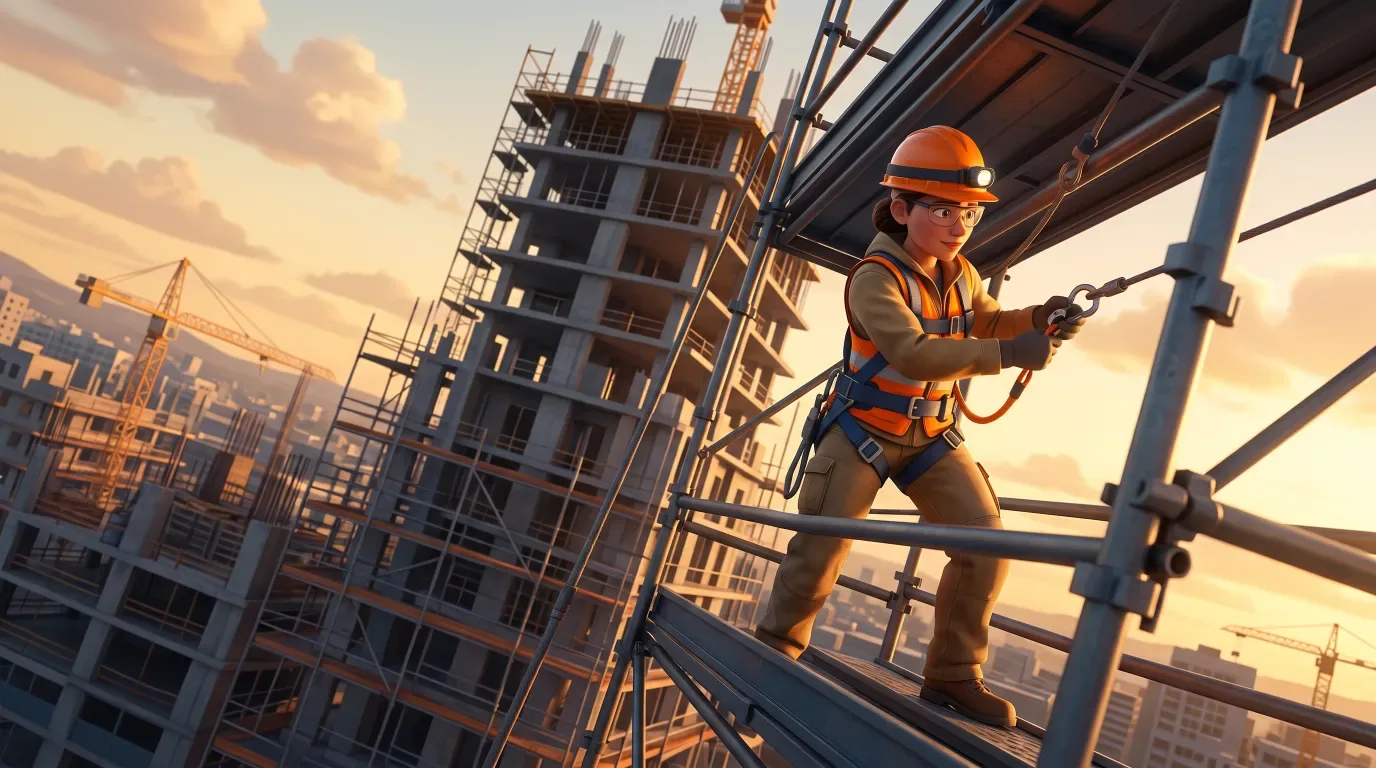
Working at Height and Fall Prevention Module
Chemicals & Pharma
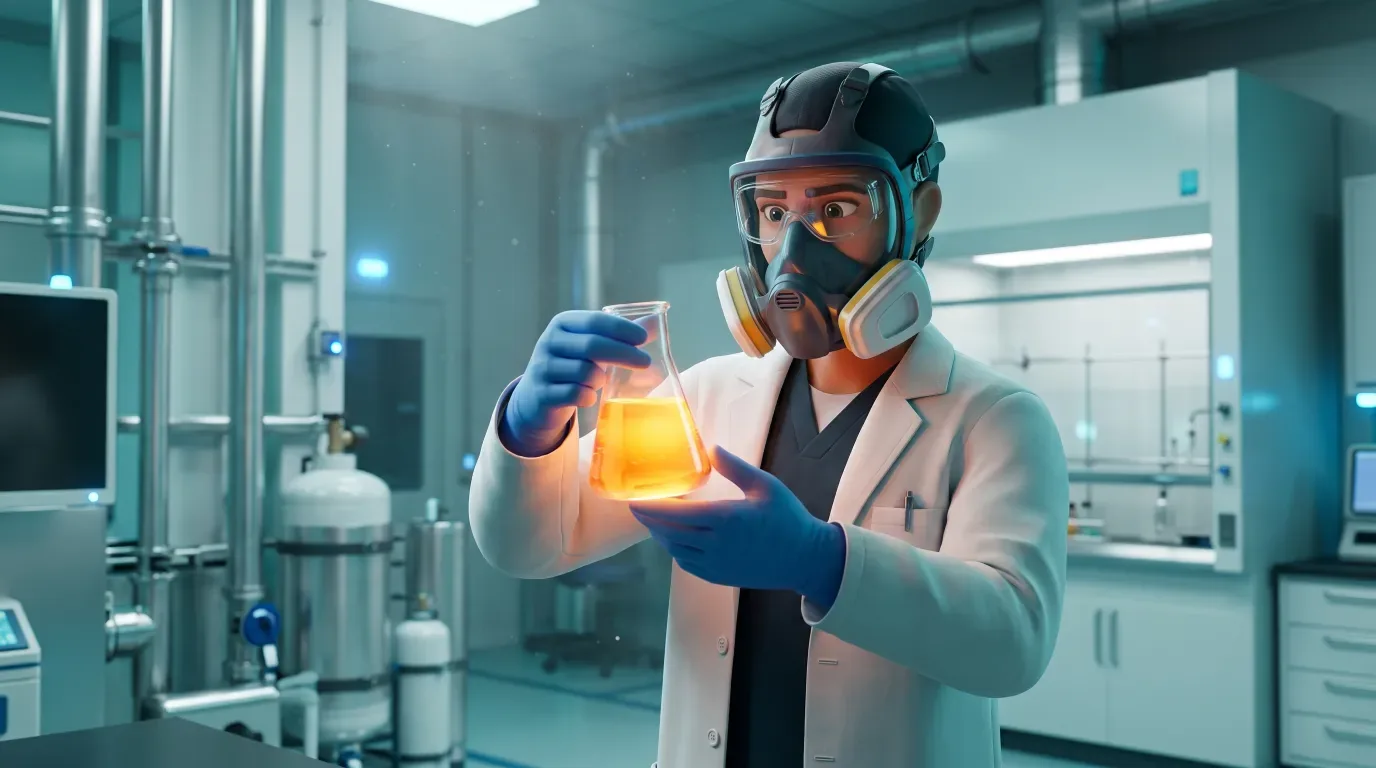
Chemical Exposure and PPE Training
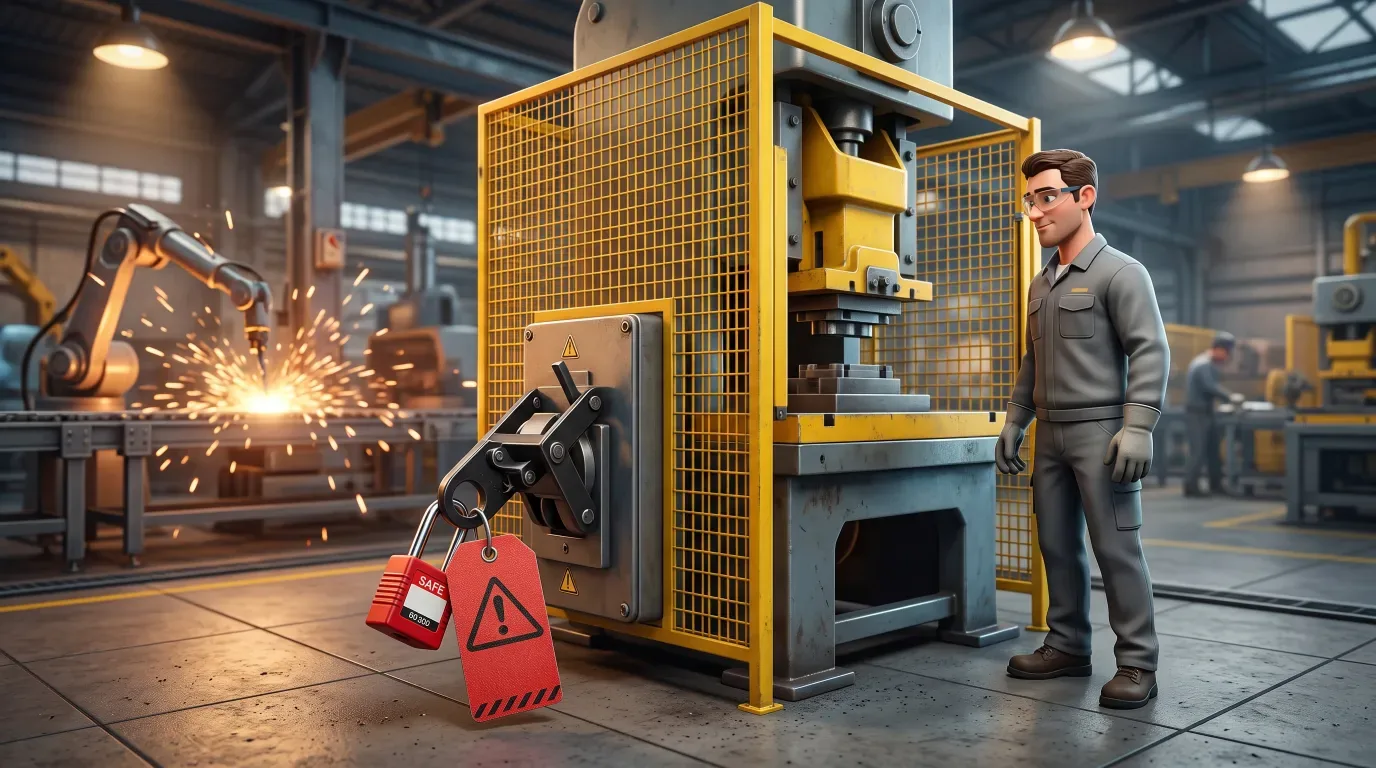
Metal & Automotive
Machine Guarding and LOTO Procedure
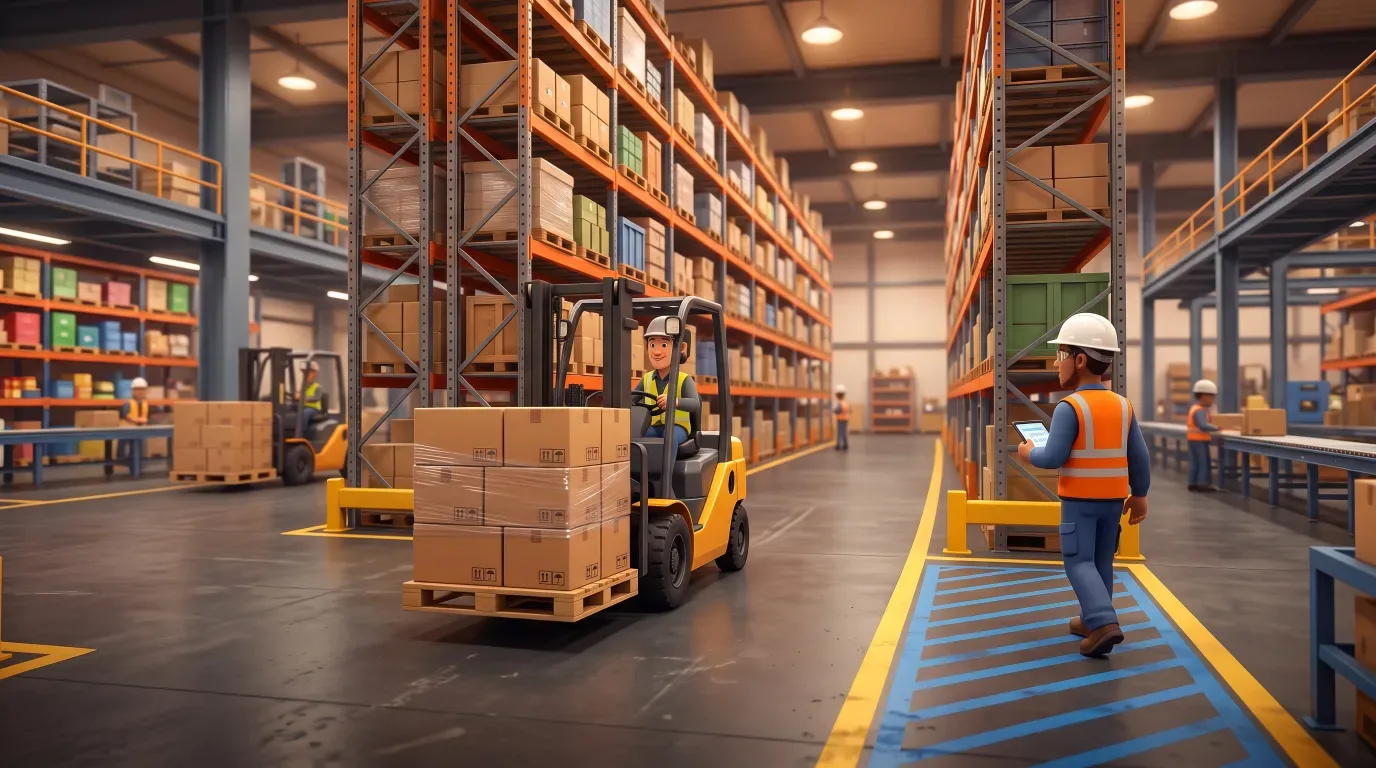
Logistics
Forklift Traffic and Safe Stacking
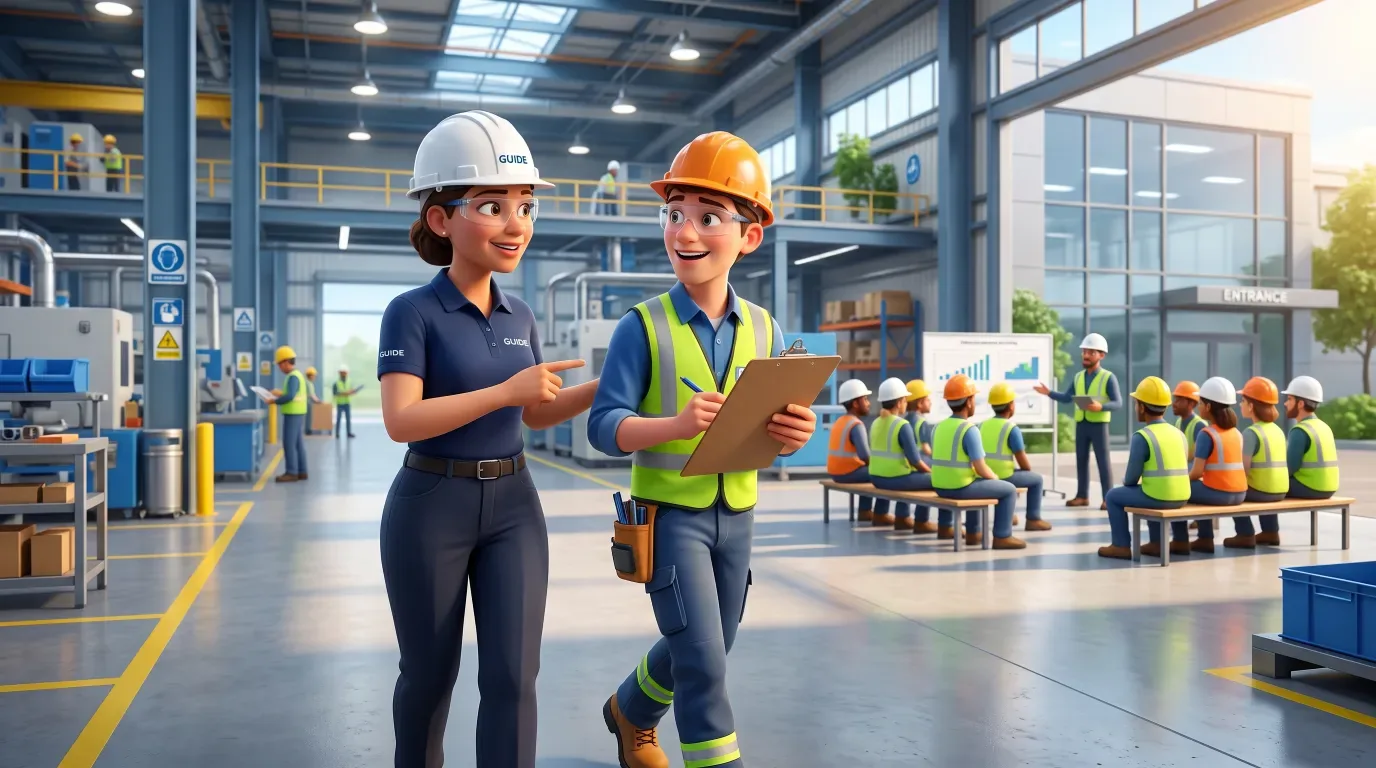
Induction
Onboarding and Site Induction Series
Our work.
Who It's For
Who is safety training animation for?
Safety training animation is for organisations that need to deliver mandatory training to large numbers of employees in a standard, trackable way:
OHS specialists and occupational physicians
To use the training material mapped to regulatory topics.
HR and training departments
To manage and document training tracking through an LMS.
Multi-location organisations
To keep the same standard across branches, sites and factories.
Workplaces employing foreign workers
To remove the language barrier.
Businesses in the hazardous and highly hazardous class
To cut cost and production loss on frequently repeated training.
Process
How is a safety training animation produced?
Hazard Class and Topic Map
We work out your hazard class by NACE code, your minimum training duration and the topics the regulation makes mandatory, then table exactly which topic each module will cover.
Risk Inventory and Script
Working with your safety specialist and occupational physician, we gather the real risks on your floor and write scenarios from your own facility rather than generic footage.
Storyboard and Visual Language
Scene-by-scene storyboard, character design and the visual language of your facility are approved before production starts; every part of the narrative is settled before we build.
Animation Production
2D/3D animation, voice-over, sound design and subtitles are produced; every language version is built on the same scene structure.
SCORM Packaging and LMS Delivery
Modules are packaged as SCORM/xAPI, uploaded to your LMS, tested, and handed over with the topic-mapping document.
Delivery
What formats do we deliver in?
SCORM 1.2 / 2004 and xAPI
Packages that upload straight into your LMS and report progress and completion data.
MP4 (1080p / 4K)
Standard video output for classroom sessions, meeting-room screens and intranet distribution.
Multilingual Voice-Over
Turkish, English, Arabic, Farsi and Russian voice-over plus .srt / .vtt subtitle files.
Quiz and Assessment
End-of-module knowledge checks, pass thresholds and automatic scoring flow.
Vertical and Kiosk Format
Re-edited output for field tablets, mobile and the touchscreen kiosk at the site entrance.
Source File Handover
Project files handed over on request so your own team can update modules later.
Related Services
Related Services
Education Animation
For onboarding, procedure and e-learning modules.
Explore→Industrial Animation
For production lines, machinery and plant walkthroughs.
Explore→VR and Virtual Reality
VR training modules for confined space and work at height.
Explore→If you have a broader production need, we can plan all our animation services under a single production structure.
All animation services→From Our Clients
Keeping training standard across our sites in different hazard classes had become hard. We uploaded the modules to our LMS; we now track who watched which training, for how long, and what they scored on the quiz — all from a single screen.
We have a large number of foreign workers in our warehouses. Receiving the same safety module with Arabic and Russian voice-over removed the language barrier completely in practice.
Explaining scenarios like chemical exposure and working at height on site was impossible. Once we showed how an incident unfolds through animation, the training became far more memorable.
FAQ
Frequently Asked Questions About Safety Training Animation
Get in touch for a module plan based on your hazard class, SCORM integration or multilingual production.
Get in touch→A health and safety training animation presents the mandatory occupational safety topics as 2D/3D animated modules whose viewing and assessment can be tracked. Instead of slides, it uses scripted visual storytelling, and it can show accident scenarios without putting anyone at risk.
The animation is the content of the training, not the training itself. Regulation requires occupational health and safety training to be delivered and documented by an occupational physician, a certified safety specialist or an authorised body. We produce the material, mapped one-to-one onto the mandatory topics and trackable; the employer and the safety professional deliver and certify it.
Regulation sets a minimum of 8 hours of basic occupational safety training for less-hazardous workplaces, 12 hours for hazardous and 16 hours for highly hazardous ones. Not all of it has to be animation — modules typically carry the core teaching while practical and on-site parts stay face to face. We plan the module set around your hazard class.
Price depends on the number of modules and total runtime, whether it is produced in 2D or 3D, whether your specific facility and machinery need to be modelled, the number of languages, and the scope of quizzes and SCORM integration. We quote per module once the topic map is agreed.
A single safety animation module usually takes 3–5 weeks; a full multi-module basic safety training set takes 8–14 weeks. Timing depends on script approval speed, the need for facility-specific 3D modelling and the number of languages.
Yes. The same module is delivered with Arabic, Farsi, English, Russian and Turkish voice-over and subtitles. Because the scene structure is shared, additional languages cost significantly less than the first production.
Yes. We prepare SCORM 1.2, SCORM 2004 and xAPI packages; modules upload into your existing LMS and report progress and completion. For organisations without an LMS we offer alternative delivery with basic view tracking.
Yes. Your current safety decks, instructions and procedure documents become the starting point for the script. We restructure the content, turn it into a scenario and then produce it as animation.
Yes. When regulation changes or a machine or procedure is replaced, the relevant scene or module is updated — there is no need to reproduce the whole set. Source files are handed over on request.
The modules are delivered for use within your organisation. Whether there is any limit tied to the scope of use, its duration and the number of employees is defined in the contract and agreed together at the quote stage.
Yes. We produce VR modules for scenarios such as working at height, confined spaces and fire evacuation, where the worker makes decisions inside the scenario rather than watching it. See our VR page for details.
Fill in the form below or contact us directly, and we will prepare a module plan suited to your hazard class along with a project-specific quote.
Safety Training Set Quote
Let's make the safety rule worth watching
Tell us your hazard class and needs in brief, and we'll prepare a module plan mapped to the mandatory topics along with a project-specific quote. If you already have OHS presentation and procedure documents, we can plan the process together even faster.
What to prepare so we can move faster
- —Your hazard class (less hazardous / hazardous / highly hazardous)
- —Number of employees and number of locations
- —The languages you need
- —Your existing OHS presentation and procedure documents, if any
Your details are only used to prepare your quote. We usually get back to you within one business day.