
AI-assisted, fast and scalable video production
VR experiences for trade shows, events and training
Touchscreen kiosk software and hardware
3D hologram display and stage solutions





Common Mistakes in Medical Training Content and How to Fix Them
Mistakes in medical training content render accurate information ineffective. Explore the solutions you can use to prevent errors in medical education content.

Medical training content plays an extremely critical role in terms of the accuracy and retention of the information it conveys. However, much training content prepared with good intentions fails to achieve the intended effect because of mistakes made during the planning and implementation stages. These mistakes not only weaken the learning process but also bring with them the risk of incorrect or incomplete information.
Why Do Mistakes in Medical Training Content Matter?
In other sectors, a flaw in a training material only leads to a loss of interest; in healthcare, the consequence is reflected directly in practice. A mechanism that has been only partly understood, or a procedural step placed in the wrong order, shows its effect not where the training ends but at the patient's bedside. For this reason, mistakes in medical training content are treated less as a quality issue and more as a matter of risk management.
The second effect is seen on the institutional side. Unfinished trainings, the same questions asked over and over and differences in practice emerging in the field make the return on the allocated budget invisible. The third is the reputational dimension: content based on an outdated source makes not only that material but also the institution that publishes it questionable in the eyes of a physician audience.
Mistakes That Arise in the Planning Stage of Medical Training Content
The most expensive mistakes in content production are made before a single frame has been drawn. Two decisions that are not settled before the script is written affect every subsequent stage: who the content is addressing and how much information it will carry in a single session.
Not Defining the Target Audience Clearly
Specialist physicians, residents, nurses and medical students do not share the same prior knowledge, the same familiarity with terminology or the same time budget. When a single material is expected to address all of these groups, the content drifts towards the average and fully meets the needs of none of them. Leaving the definition vague produces the following results:
The narrative becomes either more superficial than necessary or too technical to follow
The viewer decides within the first few minutes that the content is not meant for them
Because the level of terminology is not settled, definitions are repeated unnecessarily
The training duration is planned independently of the audience's real time budget
The production-side remedy for this mistake is to fix the audience and its level of prior knowledge in writing at the brief stage. Once the audience definition is clear, producing two separate versions of the same topic delivers a more efficient result than producing a single compromise version; the visual assets stay shared and only the narrative layer diverges. The process of preparing a medical training video also calls for this distinction to be made at the script stage.
Delivering Information Too Densely
Medical topics are layered by nature, but conveying this complexity as it is does not make learning easier. The amount of new information that working memory can process at once is limited; content that explains four mechanisms in a single scene runs the risk of losing all four. In a study conducted at Umm Al-Qura University, after 5-7 minute summary videos shown at the end of lectures, 58.5% of students reported an increase in knowledge retention, while the share giving positive feedback on recalling drug mechanisms of action was 68.9%.
The solution lies in dividing the narrative into modular scenes and assigning each module a single learning objective: first the general framework, then the mechanism, and finally the exceptions and clinical warnings. In multi-step topics such as explaining a drug's mechanism of action, this sequence produces a noticeably higher completion rate than a dense narrative delivered all at once.
Insufficient Use of Visual and Animation Support in Medical Content
Materials built only on text and static slides cannot convey the three-dimensional or time-based nature of the subject being explained. An intracellular process, a sequence of surgical steps or a device's behaviour inside tissue can only be partly represented with fixed images; the rest is left to the viewer's mental completion.
The Limit of Static Explanation
A meta-analysis of forty studies examining video-based methods in health education reported a moderate effect on knowledge acquisition in medicine (Cohen's d = 0.67) and an effect of 0.76 on skill development. This difference, which emerges when compared with static material, shows that visualisation is not a presentation preference but a methodological decision that directly affects learning outcomes.
Using the slide deck as the only tool falls within the same limit. Ways of explaining medical topics other than the slide deck make a marked difference, especially in explaining processes and mechanisms.
Making the Visualisation Decision Correctly
The solution to this mistake is not to add animation to every scene but to determine the need for visuals by asking the topic itself. Medical animation responds to specific explanatory problems, and when production is being planned, the following areas are evaluated first:
Mechanisms that take place at scales invisible to the eye (molecular interaction, tissue-level response)
Processes that unfold over time and need to be rewound (course of healing, disease progression)
Device and implant placements that require a cross-section view
Topics that need to be explained to the patient but whose visual depiction may be disturbing
Making rare cases repeatable through a standard explanation

Gaps in Scientific Currency and Source Management
Medical guidelines are revised regularly; dosage ranges, indications and algorithms change. When digital trainings that are produced once and remain online for years fall behind these revisions, they do not merely become outdated; they carry an active risk. In in-house trainings, this situation also makes it harder to identify the source of an incorrect practice.
The approach that solves the currency problem structurally is to build the content from the outset as guideline-linked modules. Keeping the sections that may change with the guideline in separate scenes and flagging those scenes in the project file makes it possible to update by renewing a single module. The chain of scientific validation requires the same discipline; the scientific reliability of medical animations is established by basing the visual on a reference that has passed physician approval. Obtaining approval at the storyboard stage prevents errors that would otherwise be noticed late in details such as anatomical proportion or process sequence.
Narrative That Is Detached from Clinical Context and One-Directional
Theoretical knowledge quickly becomes inaccessible when it is not linked to the context in which it will be applied. In materials that contain no case example, decision point or real scenario, the viewer remains passive; the information conveyed is remembered in the exam setting but not in the clinical setting. The use of animation in clinical training closes this gap by pausing the process at the moments when the viewer has to make a decision.
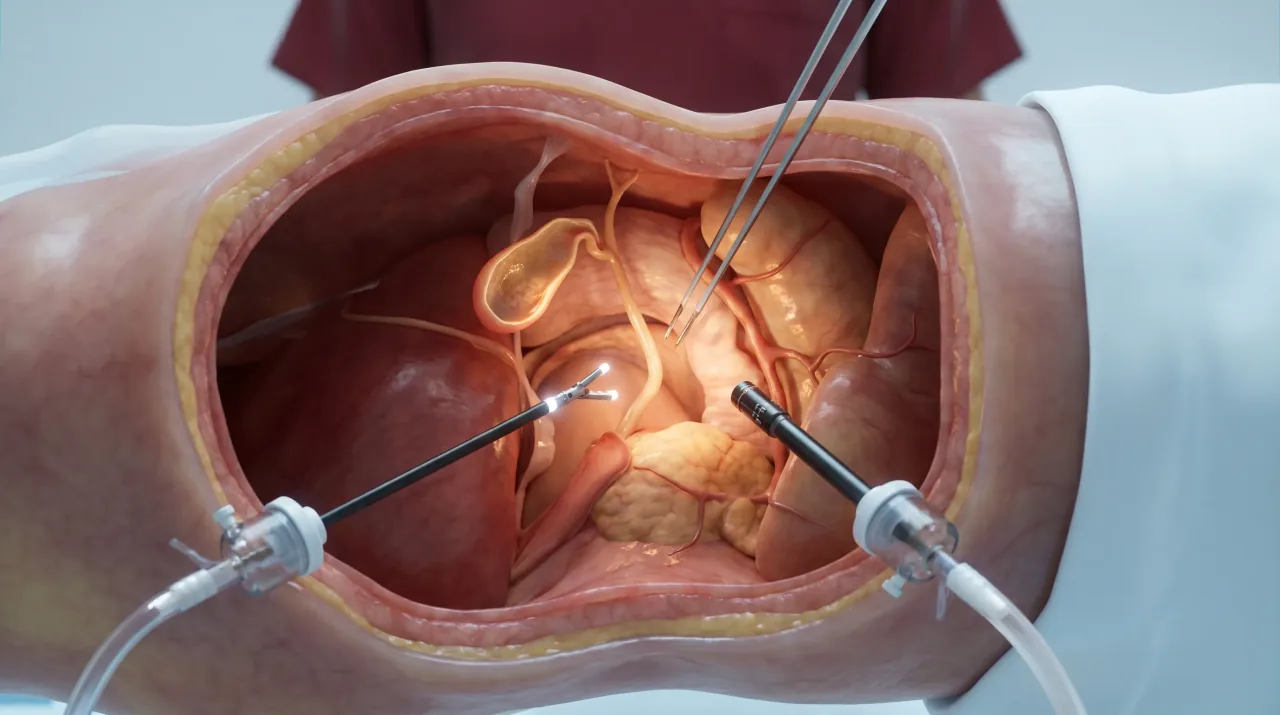
The measurable contribution of interaction also supports this direction. In a comparison carried out in preclinical physiology education, the normalised learning gain was measured at 70.1% in the interactive video group, while it remained at 49.0% for the text-based resource. On the solution side, this means placing at least one decision point in the script, short check questions at the ends of sections and a real case flow in the narrative. These elements contribute to the completion rate without significantly increasing production cost.
Pre-Production Checklist for Medical Training Content
Most mistakes in medical training content are eliminated by a few questions asked before the script is approved. In production processes for the medical sector, the following items are treated as standard checkpoints:
Have the primary audience of the content and that audience's level of prior knowledge been defined in writing?
Has the narrative been divided into modules that can be completed in a single session?
Has every scientific claim been based on a dated and accessible guideline?
Has the visualisation decision been made at the points where the topic genuinely requires visuals?
Has at least one interaction point been built in where the viewer has to make a decision?
Has it been flagged in advance which scenes will be updated when the guideline is revised?
Reduce Mistakes in Medical Training Content for Good
Preventing mistakes in medical training content is less a matter of a one-off quality check and more a discipline embedded in the production process. Defining the audience at the brief stage, structuring the information modularly, making the visualisation decision according to the needs of the narrative and tying scientific validation to physician approval prevent the same mistakes from being repeated in the next project. This approach also extends the life of the content: when a guideline is revised, the whole training is not produced again; only the relevant module is renewed. In the production of educational animation and patient education videos, the same set of checks creates a consistent quality line across materials aimed at both physicians and patients.
If you would also like to raise the quality of your training by benefiting from professional content design and medical visual solutions in your medical training content processes, get in touch with us.
Frequently Asked Questions About Mistakes in Medical Training Content
Can mistakes in existing training videos be fixed without producing them from scratch?
If the source project files are available, scene-by-scene revision is possible in most cases. Voice-over, subtitles and individual scenes can be renewed separately; re-production only comes into question if the entire narrative structure is changing.
How often should training content be reviewed?
Tracking guidelines gives more reliable results than a fixed schedule. When the guideline or indication the content is based on is updated, the relevant module is reviewed; basic anatomy explanations that are not tied to a guideline remain valid for much longer.
Who should be involved in the physician approval process?
It is preferable for a specialist with active clinical practice in the content's subject area to be involved at the script and storyboard stage. Obtaining approval only at the final stage leads to costly revisions when anatomical or sequencing errors are noticed late.
Can the same content be used for both physician and patient audiences?
Most of the visual assets can be shared, but the narrative layer diverges. Producing two separate versions from the same animation source, with different voice-over, different terminology and a different level of detail, gives a better result than a single compromise version.
Blog
All posts→




Your next project
Let's build
together.