
Films that explain products, machines and processes in 3D
Cinema-grade commercials, launch and brand films
VR experiences for trade shows, events and training
3D product tours, interactive walls and gamification
3D hologram display and stage solutions
Why Patient Education Videos Work Better?
Patient education videos make medical information easier to understand, increasing trust and treatment adherence. Explore their impact, production process and measurement methods.
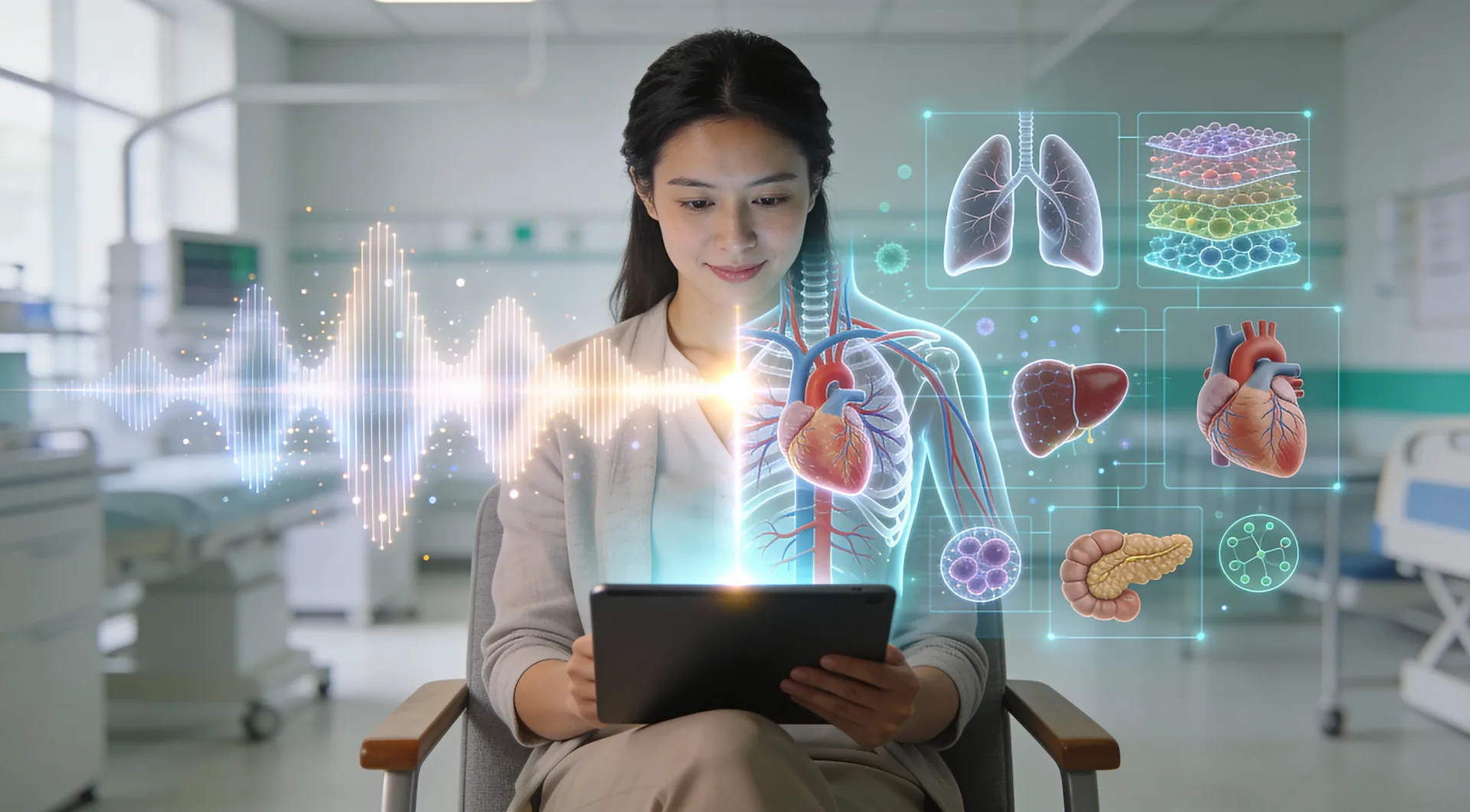
Patient education videos turn medical information into a flow the patient can watch. Details that get lost in written brochures become concrete through visual and audio narration. In this article, we look at the effect of patient education videos on learning, trust and treatment adherence, the elements that stand out in the production process and the indicators institutions follow when measuring this content.
The Core Purpose of Patient Education Videos
The core purpose of patient education videos is to simplify complex medical information and raise patients' awareness. Making information understandable directly increases trust in and adherence to the treatment process. Once patients grasp their own condition, the questions they ask during the examination also move away from superficial concerns towards the details of the process. With this purpose:
Medical concepts are simplified
Disease and treatment processes are clarified
Communication between patients and healthcare professionals is strengthened
The patient's level of preparation before informed consent rises
The same explanation reaches every patient consistently
The Limits of Written Material
Brochures and consent forms work depending on the patient's reading habits and health literacy. According to the health literacy data compiled by the WHO Regional Office for Europe, almost half of the participants in the European Health Literacy Survey have inadequate or problematic health literacy. These data make visible the risk that written material carries on its own: even if the text is read, meaning may not form.
Video narration closes this gap by reducing the reading burden. While watching a process step by step, the patient sees the term and what it means at the same time. This way, information settles in memory not as an abstract definition but as a familiar image.
The Effect of Visual and Audio Narration on Learning
When the human brain receives visual and audio information together, it processes it faster and remembers it longer. Patient education videos make use of this natural learning process. The effect becomes even more pronounced when the rhythm of the narration is set to give the patient room to digest the information.
Advantages of video narration:
Better retention of information
Fewer misunderstandings
Complex processes explained step by step
Patients can watch the content again at home with their relatives
Patients with reading difficulties can access the same information
Animation-supported videos in particular make abstract medical processes concrete. Stages that cannot be seen with the naked eye, such as a blockage inside a blood vessel, an implant integrating with bone or a molecule binding to a cell, can only be conveyed through illustration. That is why medical animation work sits at the core of patient education videos. A similar logic applies to content that requires explaining a drug's mechanism of action.
Written Information vs Video Narration
The two methods are not alternatives to each other but two complementary channels. The table below summarises how the same information reaches the patient in two different formats:
Criterion | Written brochure or form | Patient education video |
Condition for understanding | Requires reading skills and health literacy | Uses the visual and audio channels together |
Abstract processes | Limited to text and static diagrams | Shown in motion with animation |
Consistency | May vary from person to person in verbal explanation | The same explanation reaches every patient |
Repeatability | Rereading depends on the patient's willingness | Shared via a link, watched as many times as needed |
Updates | Requires reprinting | Updated by renewing the relevant section |
Clinical time | The entire explanation takes place during the consultation | Basic information is delivered before the consultation |
The last row points to the most concrete contribution in terms of clinical workflow. In a randomised controlled trial conducted before cataract surgery, the consent discussion lasted an average of 117.5 seconds for patients who watched an information video, while for the group with only a face-to-face discussion this rose to 241.6 seconds. The comprehension and satisfaction scores of the two groups remained close to each other. In other words, video frees up the physician's time without compromising the information conveyed.
Increased Treatment Adherence
When patients understand what they are going through and why they need to follow a particular treatment, they take part in the process more consciously. Videos strengthen this understanding and increase treatment adherence. Especially in the post-discharge period, how instructions are remembered directly affects the speed of recovery.
Thanks to this effect:
Medication errors decrease
The treatment process progresses more smoothly
Patient satisfaction rises
Unnecessary check-ups and phone calls become less frequent
Relatives also learn the same information in full
This observation has also been tested in a clinical setting. A randomised study reported that patients who received their discharge instructions by video after an outpatient procedure achieved markedly higher comprehension scores than the group that received the same instructions in writing. Most of the patients in the video group stated that they preferred the two formats to be offered together. Rather than replacing written material completely, video acts as an entry point that makes it readable.
Patient-Centred and Empathetic Narration
Patient education videos do more than provide information; they offer narration that builds empathy. Gentle language, simple graphics and a calm voice-over help patients feel safe. The tone of the narration is as decisive as the information itself.
Effective patient-centred videos:
Reduce fear and uncertainty
Encourage the patient's active participation in the process
Increase trust in the healthcare institution
Set expectations before the procedure within a realistic frame
Anxiety is a variable that cannot be ignored in this equation. A systematic review and meta-analysis published in BMC Psychology reports that preoperative anxiety affects between 60 and 80 percent of surgical candidates. The same study shows that the effect of an information video on anxiety before caesarean section remained statistically inconclusive, whereas it improved postoperative satisfaction.
This distinction is a reminder that video does not produce the same result in every case. If the source of anxiety is a lack of information, the narration has a calming effect; if the source is fear of the procedure itself, video alone is not enough. Clarifying which problem is being solved when building the scenario places the content on a realistic goal. Who the content addresses matters just as much; clinical training videos aimed at healthcare professionals differ from patient content in terminology and depth.
Production Stages of an Effective Patient Education Video
Patient education videos are built on a framework of information approved by physicians. The production process moves forward in a way that maintains the balance between medical accuracy and clarity. The general flow followed in producing this type of content is as follows:
Defining scope and target audience: It is determined which patient group the content will reach and at which stage.
Compiling medical content: The information is verified and simplified together with the institution's clinical team.
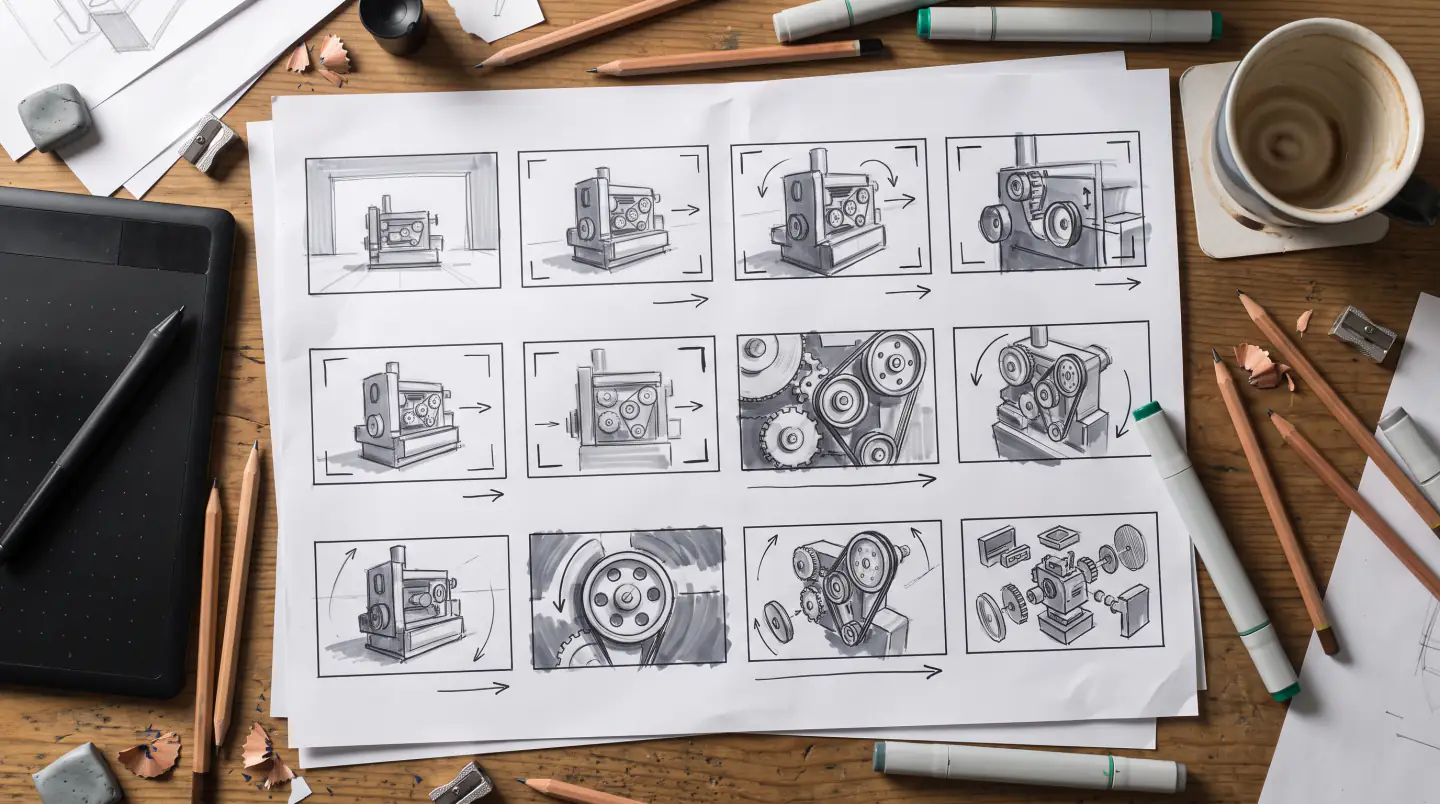
Scenario and storyboard: The order of the narration is matched with its visual counterparts.
Visual production: Anatomical models, diagrams and animation scenes are prepared.
Voice-over and subtitles: The script is read at a pace that suits the patient's ability to follow.
Clinical review: The final edit is submitted for physician approval before publication.
The details of this flow largely overlap with the method followed for medical training video production. The only difference in patient content is that the language and level of detail are adjusted for a non-specialist viewer.
Voice-Over, Language and Accessibility Choices
The tone and speed of the voice-over shape how the patient follows the information. A hurried narration makes even correct information feel alarming. The use of voice-over in animation is the stage where this balance is struck.
The choices that stand out in terms of accessibility are:
Subtitles switched on by default
A visual edit that can be followed without audio narration
High-contrast text and a readable font size
Separate voice-over or subtitle versions for multilingual viewers
A scene layout that does not break on mobile screens
Common Content Mistakes
The most common problem in this content is scene density overshadowing the information. When the patient is expected to follow the narration and a moving graphic at the same time, one of the two gets lost. A similar risk arises when more than one treatment path is squeezed into a single video.
Not simplifying terminology at all, or conversely oversimplifying information to the point where it becomes misleading, are also common situations. Using visuals of unclear origin is another threshold that damages the institution's credibility; that is why the reliability of medical animation is assessed together with the content approval process.
The Power of Video in Digital Health Communication
For websites, mobile apps and patient portals, video content generates much higher engagement than written text. SEO-friendly patient education content improves visibility and user experience. A user searching for the name of a treatment on a search engine keeps staying on the page when they come across an explanatory narrative instead of a wall of text.
This approach:
Increases time on page
Makes information easier to access
Strengthens digital health communication
Allows the same content to be used on waiting room screens and patient portals
The use of video is not limited to a single channel. Once produced, the narration can be carried with the same consistency to appointment confirmation emails, the institution's social media accounts and screens inside the clinic. In visual communication work for the medical sector, this multiple use noticeably extends the life of the content.
How Is the Impact of Patient Education Videos Measured?
Evaluating the impact of patient education videos by view count alone can be misleading. To see whether the content has really been understood, clinical and digital indicators need to be considered together. The table summarises the key indicators used for this purpose and what they point to:
Indicator | What it shows | Where it is tracked |
View completion rate | Whether the pace of the narration suits the patient | Video hosting dashboard |
Drop-off second | In which scene interest is lost | Video analytics |
Consultation time | How clinical time changes | Physician feedback and appointment records |
Recurring patient questions | Which topic is missing from the content | Patient communication unit notes |
Number of post-discharge calls | How well instructions are understood | Call centre records |
Time on page | How the content performs in the digital channel | Web analytics |
When these indicators are read together, it becomes clear which scene needs to be re-edited. Drop-off seconds concentrating in a particular part of the narration often indicate that the section has remained too technical. Rather than producing the content once and shelving it, reviewing it periodically with this data is a healthier approach.
Strengthening Health Communication with Patient Education Videos
Patient education videos make health information more understandable, reliable and effective. Thanks to the power of visual and audio narration, patients better understand their own health processes and take part in treatment more consciously. Video narration eases clinical time while maintaining the level of understanding, and makes discharge instructions easier to remember. The fact that the effect is not the same in every case requires the goal of the content to be clarified from the outset.
If you would like to strengthen your patient communication and healthcare experience by benefiting from the advantages of professional medical animation solutions in your patient education video processes, get in touch with us.
Frequently Asked Questions About Patient Education Videos
How long should a patient education video be?
The length varies depending on the complexity of the procedure being explained. Videos that focus on a single topic should preferably stay within a length that does not distract the patient. If more than one treatment path is to be explained, dividing them into separate sections rather than squeezing them into a single video gives a healthier result.
Can the same video be used in different languages?
In animation-based content, the visual layer remains independent of language, so in most cases changing only the voice-over and subtitles is enough. This structure significantly reduces production costs for institutions that accept international patients. Keeping on-screen text in a separate layer makes it easier to add languages later.
How often should videos be updated?
An update is needed when the treatment protocol, the device used or drug information changes. Apart from that, an accumulation of recurring questions from patients is also a good sign that a review is due. Keeping animation files as projects allows only the relevant scene to be renewed.
How is this content distributed within the institution?
The most common use is a link added to the appointment confirmation message. Screens in the waiting area, the patient portal and the relevant treatment page on the institution's website are the other distribution points. Having the same content in more than one channel allows patients to reach the information at the moment they prefer.
What determines the cost?
The number of scenes, the need for anatomical modelling, the level of animation detail and the number of language versions are the main factors that determine the cost. Reusing an existing model makes it easier to produce similar content. The items that guide budget planning can be considered together with the factors affecting medical animation prices.
Blog
All posts→
Your next project
Let's build
together.