
Films that explain products, machines and processes in 3D
Cinema-grade commercials, launch and brand films
VR experiences for trade shows, events and training
3D product tours, interactive walls and gamification
3D hologram display and stage solutions
VR Training Simulation: Virtual Reality in Corporate Training
What is a VR training simulation and how is it used in occupational safety, industrial and medical training? Explore cost, timeline, measurement and the project process.
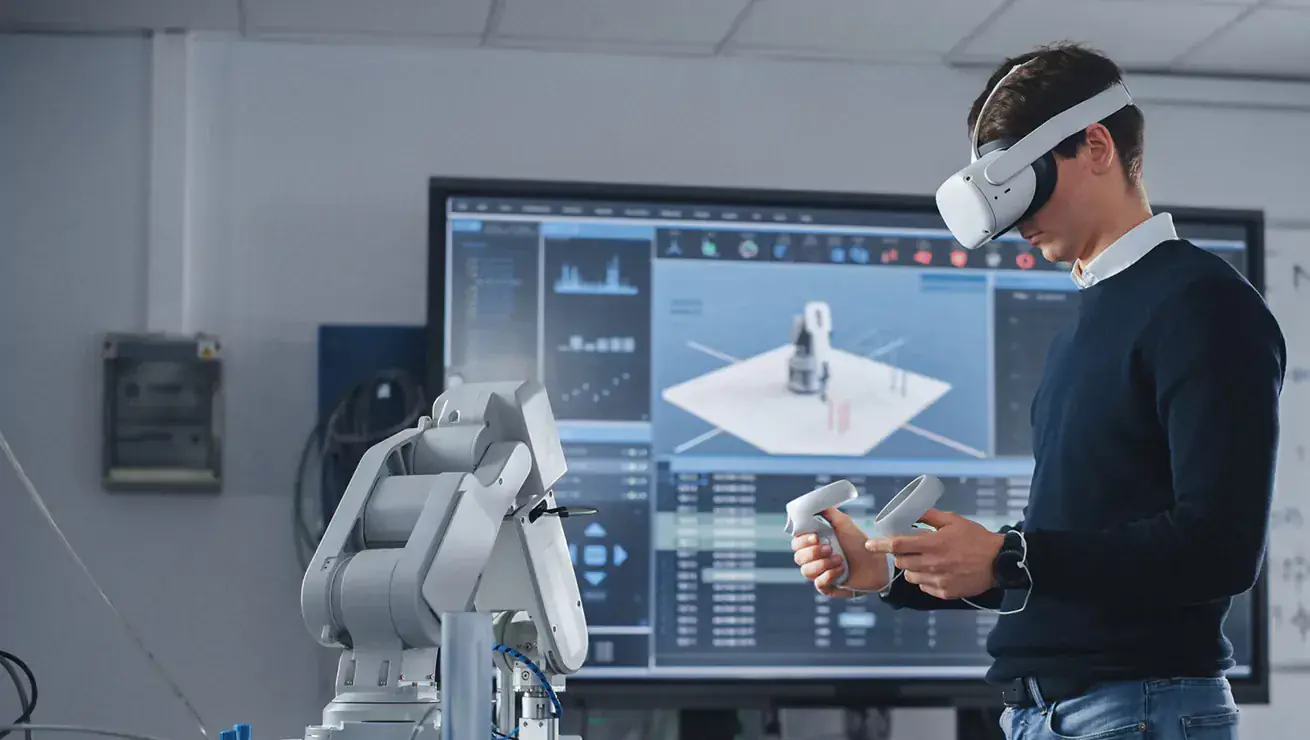
Risky tasks such as working at height, machine intervention or emergency medical procedures can be repeated safely in a VR environment. This can also make the budgeting and planning of training processes more efficient. In this article, the working logic of VR training simulation, its use cases in occupational safety, industry and medicine, cost and measurement criteria, and the project process are discussed in line with corporate training needs.
What Is a VR Training Simulation and How Does It Differ from Traditional Training?
A VR training simulation means modelling a work process or risk scenario in three dimensions and letting employees experience it first-hand through a virtual reality headset. The participant doesn't watch what is being described but stands inside the scene; they close the valve with their own hand and, when they choose the wrong equipment, they see the result. Because the scenario engine records every move, data on who made a mistake at which step is available at the end of the training.
The practical difference from traditional training is that it offers a rehearsal of behaviour rather than a transfer of information. In presentation and video training, employees learn the procedure but carry it out for the first time in the field, with real risk. Training with virtual reality moves this first attempt into a controlled environment and allows the same scenario to be repeated ten times. Moving from spectator to practitioner directly changes the training outcome, especially in jobs where the cost of error is high.
How Does a VR Training Simulation Work?
A typical corporate session lasts around ten minutes. The employee puts on the headset, picks up the two controllers and finds themselves in a digital twin of the real facility: the same line, the same panel layout, the same warning signs. The system first teaches how to grab objects and move around with a short familiarisation step, and then the scenario begins.
The VR simulation software running in the background processes every choice the participant makes as a decision point. When the steps are followed in the right order the process flows, and when a safety step is skipped the consequence becomes visible immediately. At the end of the session, completion time, number of errors and correct-step rate turn into a scoreboard. Because the training manager can see this table without having to watch each session one by one, assessment moves away from observation notes and rests on measurable data. On the VR and AR solutions side, this flow is designed on the basis of the organisation's existing procedure document.
The Difference Between 360° Video, 3D Simulation and Interactive VR
Training content delivered through a virtual reality headset varies in terms of production requirements and level of interaction. The method is chosen according to the purpose of the training and the actions expected from the participant. You can compare the four methods frequently used in corporate training projects in terms of interaction level, production effort and area of use in the table:
Method | Interaction level | Production time | Relative cost | Best use |
360° video | Mainly viewing, limited guidance | Shortest | Low | Facility introduction, orientation, environmental awareness |
3D animation-based training | Next to none, narration-focused | Medium | Medium | Explaining invisible mechanisms and process flows |
Interactive VR simulation | High, requires decisions and manual skill | Longest | High | Risky interventions, operator competence, drills |
AR-assisted field training | Medium, guidance on real equipment | Medium | Medium and above | On-site guidance for maintenance steps, trade show demos |
The comparison in the table shows that the main factor determining the budget is the level of interaction rather than resolution or content length. If the aim is to raise awareness, a 360-degree virtual tour can be prepared in a short time. However, if employees are expected to carry out the correct steps themselves, an interactive simulation is needed. That is why many organisations use 360° content for wide audiences together with interactive simulations prepared for critical job groups.
Which Training Is Suitable for VR and Which Is Not?
Not every training topic requires a VR investment. When choosing, the content of the training and the skills expected from participants are decisive. If the topic is limited to transferring information, traditional methods may be enough. For training that requires practice and decision-making, a virtual environment offers a more functional option. You can review in the lists below when each of the two methods may be preferred.
Training types where a virtual reality investment pays off are:
Accident and emergency scenarios that are dangerous to rehearse in real life
Standard training given repeatedly to large numbers of people every year
Line and machine training that cannot be delivered without stopping production
Maintenance, assembly and device operation processes where the cost of error is high
Topics where the standard must stay the same at every location for teams spread across the field
Topics where traditional methods remain more efficient are as follows:
Training that requires reading regulatory text and acknowledgement by signature
Small group work built on discussion and role exchange
One-off content given once a year to a limited number of people
New processes that have not yet settled, where the procedure changes frequently
Industry VR Training Scenarios: Occupational Safety, Industry and Medical
Demand for corporate VR training usually comes from three places: the OHS unit, production management and the training teams of medical device manufacturers. What all three have in common is that repeating the training in a real environment is either dangerous, expensive or physically impossible.
VR Occupational Safety Training: Working at Height, Fire and Confined Spaces
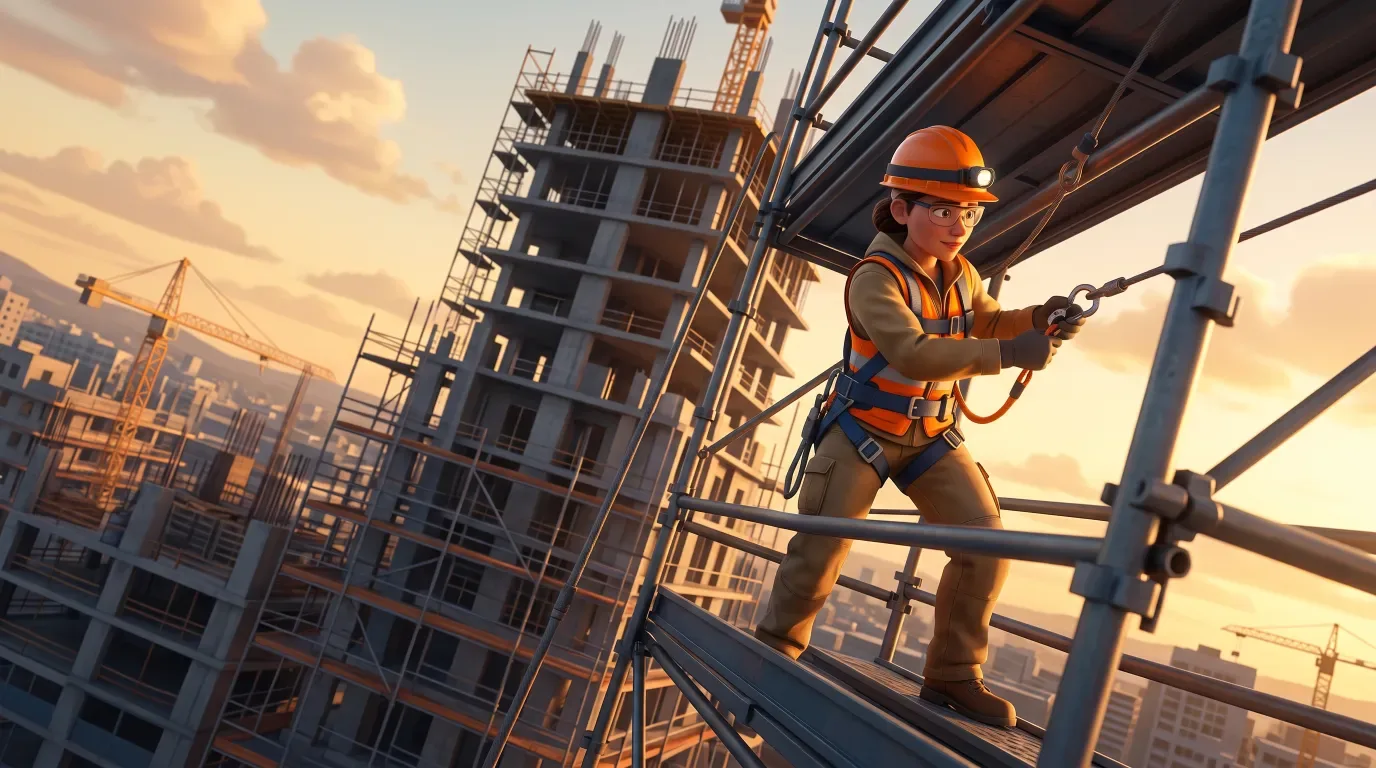
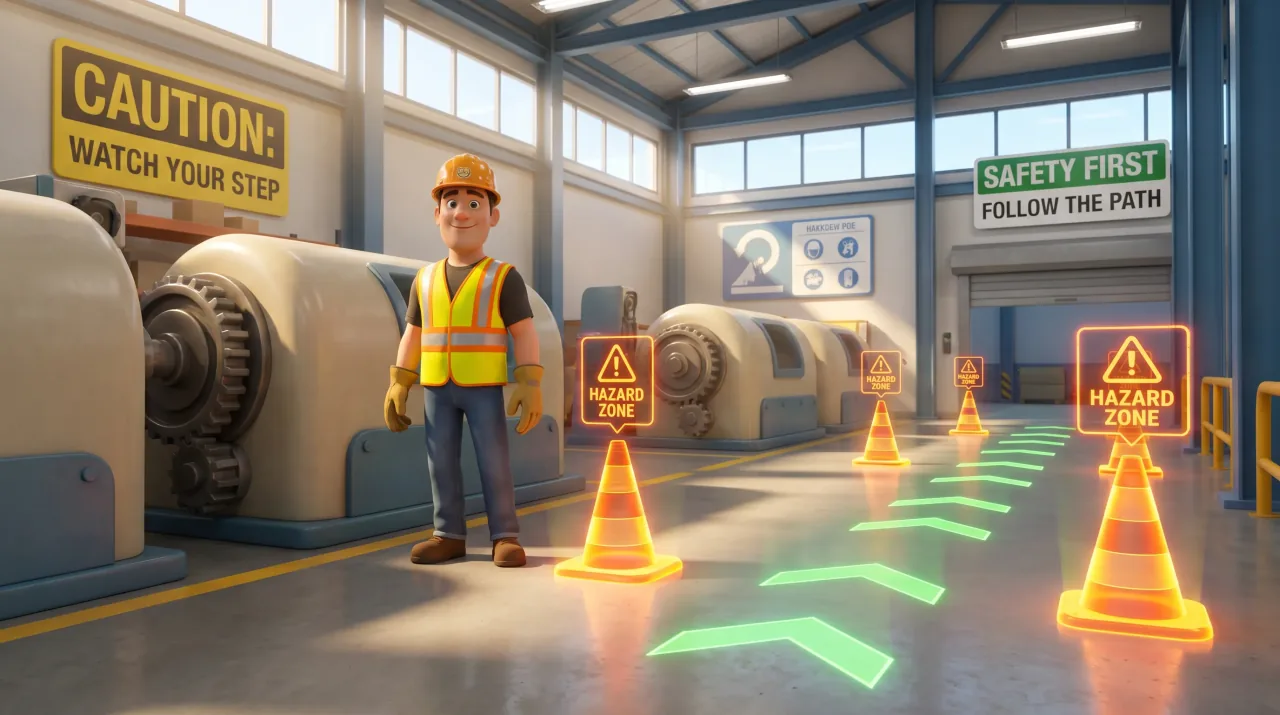
VR occupational safety training is built on letting people safely experience an accident that cannot be rehearsed in reality. When an employee fastens the safety harness incorrectly, they feel the moment of the fall; when they enter a confined space without measuring gas, the scenario ends with the consequence. According to International Labour Organization data, worldwide around 3 million people lose their lives every year due to work-related causes and 395 million workers suffer non-fatal work accidents; against this picture, drills turning into a formality repeated once a year leaves a serious gap.
Under Türkiye's Occupational Health and Safety Law No. 6331, emergency drills must already be carried out regularly. The virtual environment does not remove this obligation; it plays a complementary role because it makes preparation before the drill and repetition after it possible. On the visual explanation side, packages designed together with OHS training animation allow the same scenario to be used both for group viewing and for individual headset experiences.
Industrial VR: Machine Operator, Maintenance and Assembly Training
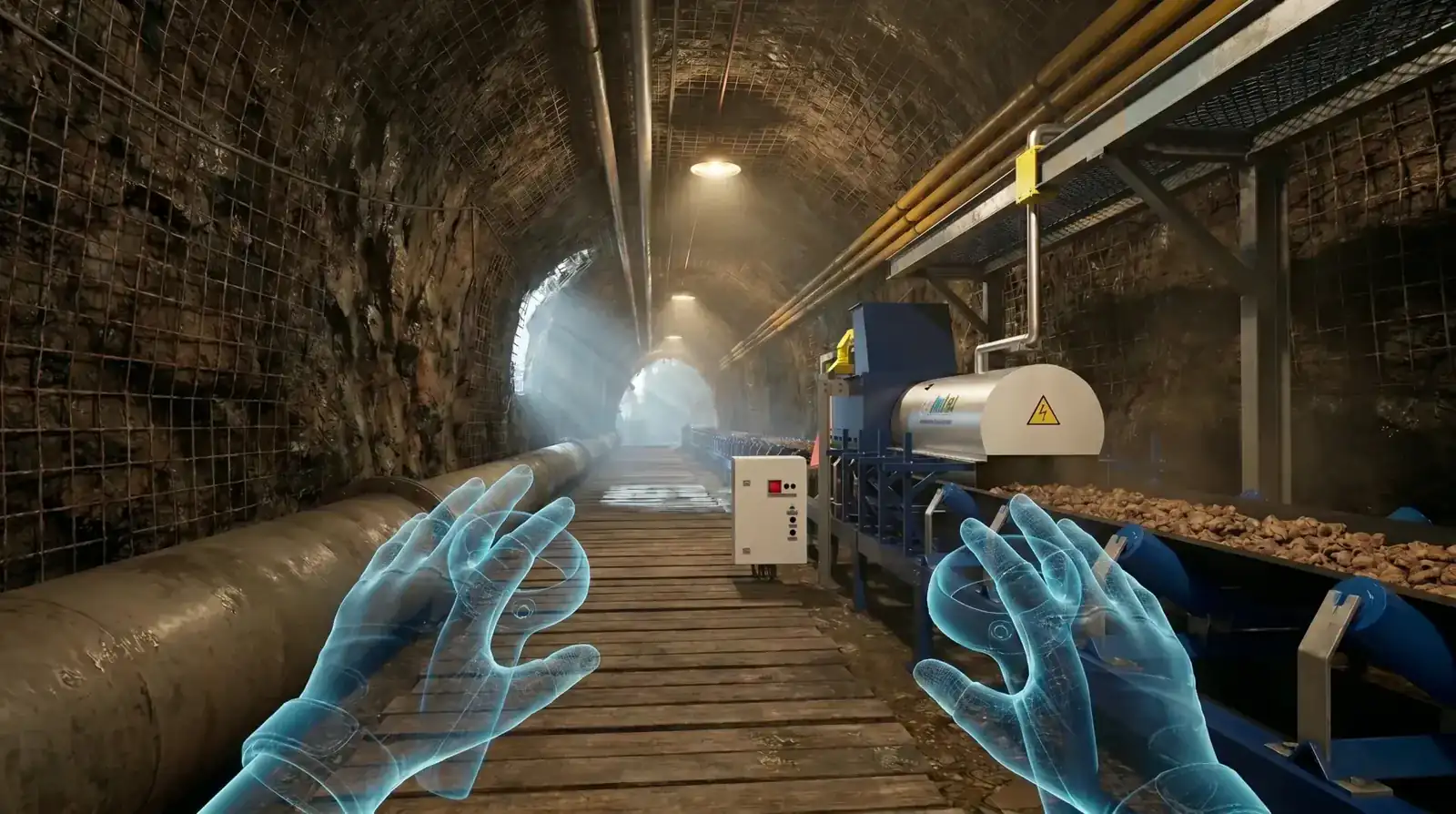
In production facilities, the real cost of training is not the trainer's fee but the stopped line. Training a new operator on a real machine slows production, and the cost of incorrect interventions during trials falls on the equipment. Industrial VR applications separate this trial entirely from the line; the operator goes into the field after practising dozens of times on the machine's digital twin.
Preparing the team before a new line is commissioned follows the same logic. While the machine is still being assembled, a simulation produced from technical drawings allows the operator and maintenance team to learn the process by heart. Because the same 3D assets are later reused in factory simulation animation or industrial animation work, the initial investment is not confined to a single training topic.
Medical VR Training: Device Use and Procedure Simulation
In medical VR training, demand usually comes from device manufacturers. The field team being able to explain the product correctly, and physicians not trying the device for the first time at the patient's bedside, affect clinical trust as much as the sales process. Repeating procedure steps in a virtual environment reduces dependence on cadavers and demo devices; training reaches geographically dispersed teams with the same standard. For the clinical accuracy of the explanation, the source discipline of medical animation production applies here as well.
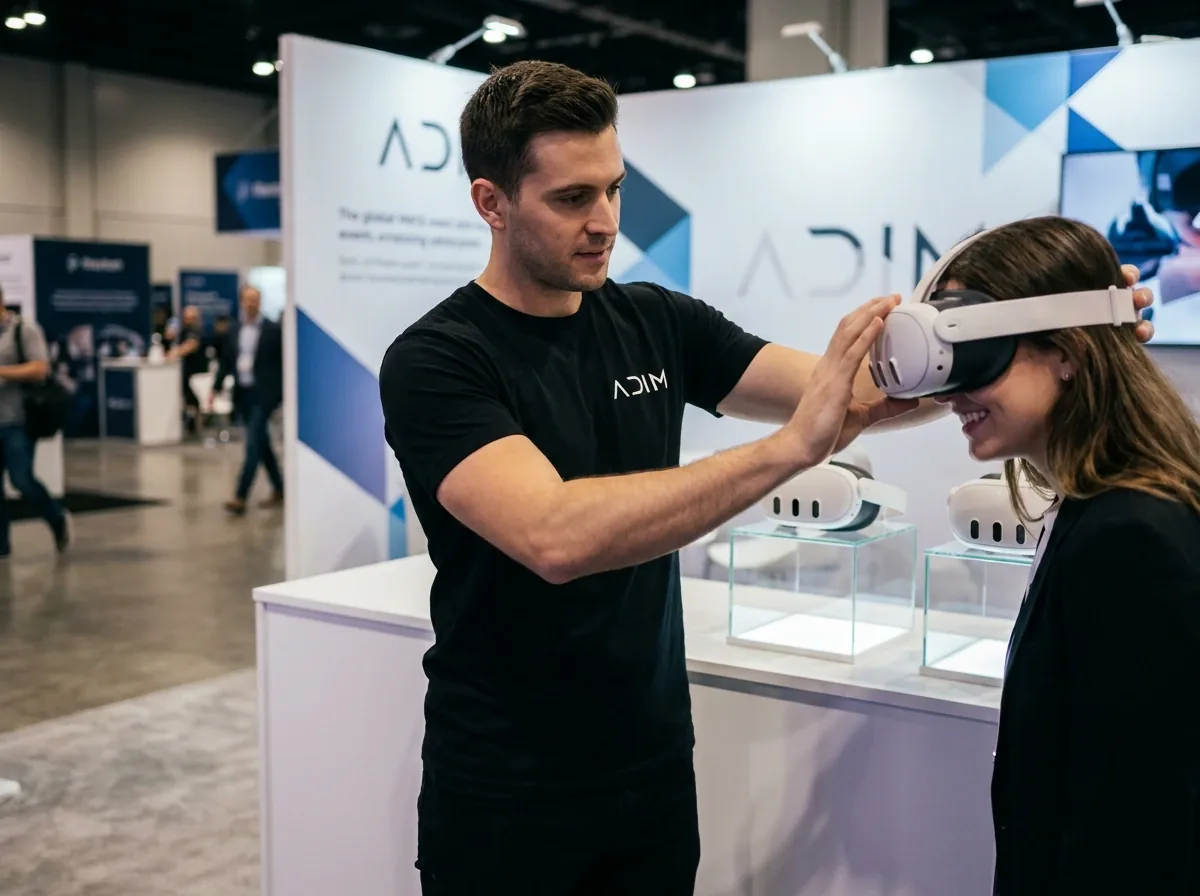
Trade show and congress stands are the second area of use for this content. Rather than handing over a brochure at the table, letting a physician put on the headset and use the device in a virtual environment extends the time spent at the stand and creates a chance to explain the product's distinguishing feature. When the work follows the same scenario as the medical training video, a single production serves both field training and congress presentations.

Orientation, Factory Tours and Trade Show Experiences
The value of a VR training simulation often emerges outside the topic it was first commissioned for. The digital facility that is produced lets new employees tour the entire site during onboarding orientation; the same scene shows trade show visitors the scale of the facility; and in an investor presentation it becomes visible proof of the capacity being described.
This reuse prevents the cost from being loaded onto a single department. Human resources, marketing and sales teams draw on the same asset library. In a VR trade show experience concept, the content is shortened and the number of interactions reduced to suit the pace of the stand, while the training version stays in the field with the full scenario. Running the process under one roof, from scenario writing to 3D production, is the key factor that keeps these versions from drifting apart.
The Return on Corporate VR Training: Cost, Time and Measurability
At the proposal stage, the real question is not how impressive the technology is but which items the investment pays back through. A VR training simulation makes a measurable difference in three areas: cost per repetition, training time and turning output into data. When these three are assessed together, it becomes clear at how many people the investment starts to make sense.
Where Are Savings Made in Training Costs?
When comparing VR training costs, only the trainer's daily fee, the visible cost on the traditional side, is usually taken into account; the real burden, however, builds up in invisible items. The headings below show costs that are usually left out when preparing a comparison table but add up to a significant amount over the year:
Trainer daily fees and session fees repeated at multi-location facilities
Travel and accommodation for participants and trainers, and working hours lost to travel time
Production loss from lines stopped for training
Consumables used in drills, fire extinguisher refills and wear on demo equipment
The organisational burden set up from scratch for each new group of hires
In a virtual setup, most of these items turn into a one-off production cost. In the first year of the investment, hardware and content production come to the fore, while in the following years only updates and device maintenance remain.
Shorter Training Time and Knowledge Retention
Experiential learning reducing the need for repetition is one of the topics most supported by data at corporate scale. In PwC's comparative study with new managers, participants trained with virtual reality completed the same content four times faster than in classroom training, and after 375 participants the cost broke even with classroom training. The same study showed that when the number of participants rose to 3,000, the cost fell by half compared with classroom training.
These results should not be expected to carry over to every industry at the same rate. The gain depends on how close to reality the scenario is designed and how much time the employee spends in the headset. Still, the direction is clear: repetition that involves the body stays in memory longer than text that is read, and it reduces the frequency of refresher training.
Measurable Training: Performance Data and LMS Integration
The weakest side of traditional training is that the attendance list is its only output. In a virtual environment, every session generates its own data, and this data can be turned into competence tracking. The main metrics that can be recorded at the end of a session are:
Scenario completion time and time spent per step
Total number of errors and the step at which errors recur
Correct-step rate and how often safety-critical steps are skipped
Number of repetitions and the participant's improvement curve across attempts
Comparative success table by department, shift or location
Transferring these outputs into the existing LMS or HR system stops training from being an isolated island. With an integration built on standard learning protocols, completion and score information is written to the employee's existing record; the competence matrix and refresher schedule are managed from the same place.
How Is the Return on a VR Training Investment Calculated?
The calculation to be taken to the decision board doesn't need complex models. The annual gain is worked out with this framework: (number of people to be trained during the year × traditional training cost per person) − (production fee + hardware + annual maintenance and updates).
While the production and hardware items pull the result down in the first year, only maintenance remains in the equation from the second year onwards.
For the calculation to be realistic, line downtime and travel costs must be included in the traditional training cost per person. When these items are ignored, a VR training simulation looks more expensive than it is; when they are included, the break-even point is reached within the first year at most production facilities.
How Is a VR Training Simulation Project Run?
Fitting the project into the organisation's internal approval processes is as decisive as technical quality. Tying the brief, approval, revision and delivery steps to a schedule from the outset prevents the training unit from missing its budget period.
Needs Analysis and Scenario Design
The process of preparing virtual reality training content starts at the desk, before technical production. In the first stage, the training goal, critical error scenarios and success criteria are put in writing. Which behaviour is expected to change, which error costs the most in real life, and what threshold counts as passed at the end of the session: moving into production before these three questions are clear is what strains a project the most.
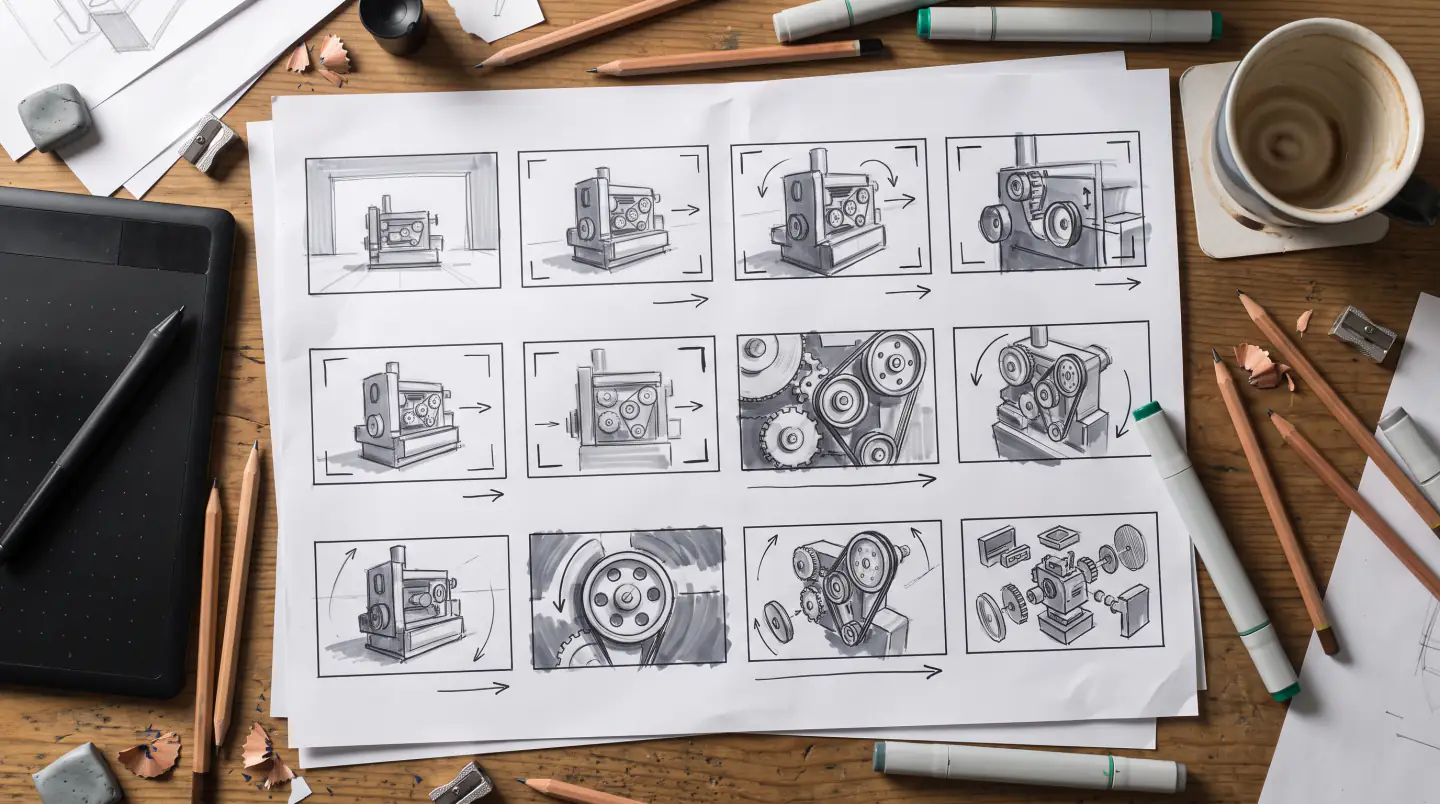
Site visits, existing procedure documents and, where available, accident records form the raw material of the scenario. Once the scenario script is approved by the training unit and the OHS specialist, the project moves on to the storyboard stage; this way, the content discussion is not reopened after 3D production has started.
Hardware Choice: Standalone Headsets, PC VR and Multi-User Setups
The hardware decision is made according to how many people will be trained at the same time. Standalone headsets that need no cables and can be carried around the site are practical for orientation and large-scale OHS training. In simulations that require high-polygon machine models and precise physics, systems connected to a computer deliver more stable results.
In organisations with many locations, a schedule is set up in which devices are used in rotation. Renting remains reasonable for training held a few times a year, while for setups that will be in continuous use, buying becomes the better option from the second year onwards.
Production Process, Delivery Time and Cost Factors
The main items that determine the production schedule are modelling volume, number of interactions, number of languages, voice-over and integration needs. Being able to use existing CAD data noticeably shortens modelling time, while every new decision point adds both software and testing workload. In multilingual releases, planning the text and voice-over layer from the start avoids the cost of later additions.
Working with ranges rather than an exact price is healthier: between a single-scenario, single-language production with limited interaction and a multi-scenario, LMS-integrated, multilingual setup, both the schedule and the budget differ significantly. Keeping the schedule predictable depends on dividing production into stages and opening each stage for approval with an interim delivery.
Rollout, Updates and Technical Support
When the line changes or the procedure is updated, the content doesn't need to be rewritten. In modular scenarios, the changed step is handled as a separate block; the scene and asset library are preserved. This structure keeps the cost of updates to a small fraction of the initial production.
Device management in the field is also part of the plan. If the headsets' charging routine, central distribution of content versions and post-use hygiene routine are not defined, a technically successful production can quickly fall out of use. Assigning someone from the training unit to device management determines whether the rollout is sustainable.
Frequently Asked Questions About VR Training Simulation
How long does it take to prepare a VR training simulation?
The timeline is directly linked to the number of scenarios and the state of the existing technical data. A single-scenario project with CAD data ready can be completed within a few weeks, while productions with multiple scenarios and integrations extend over several months. Closing scenario approval in the first stage is decisive for firming up the schedule.
What does the cost of a VR training simulation depend on?
The main cost driver is not duration but the number of assets and decision points to be modelled. The number of languages, voice-over, LMS integration and whether the hardware will be purchased also change the total budget. That is why comparing proposals together with a scope table gives a sounder result.
Can VR occupational safety training replace mandatory training?
The training hours and certification obligations set by the regulations remain in place; the virtual application does not replace these obligations. In practice, it is positioned as a layer for pre-drill preparation, refresher training and awareness. For the current interpretation of the legal framework, an assessment together with the organisation's OHS specialist is recommended.
For how many employees does VR training make sense as an investment?
Rather than giving a fixed threshold, it is better to look at how often the training is repeated. How many times the same training is given during the year, at how many locations it is repeated and how much production stops in each session determine the calculation. When the number of repetitions is high, the investment can pay for itself even with a limited number of employees.
Does it integrate with our existing training system (LMS)?
Common learning management systems are open to data exchange via standard protocols, and completion and score information can be written to the employee record. The scope of the integration is determined by the version of the existing system and which fields the HR side wants to see. Discussing this topic at the needs analysis stage reduces the need for additional development later.
Can VR training content be updated when the process changes?
In a modular setup, the changed step is handled as a separate component and the scene as a whole is preserved. When a new machine is added or a procedure step changes, only the relevant section is produced again. Regular archiving of source files and the asset library is the key condition that determines how quickly this update can be made.
Blog
All posts→
Your next project
Let's build
together.