
Films that explain products, machines and processes in 3D
Cinema-grade commercials, launch and brand films
VR experiences for trade shows, events and training
3D product tours, interactive walls and gamification
3D hologram display and stage solutions
How 3D Flow Animations Help Simplify Complex Processes
3D flow animations simplify the technical explanation of complex processes. This guide covers use cases, production steps and planning criteria.
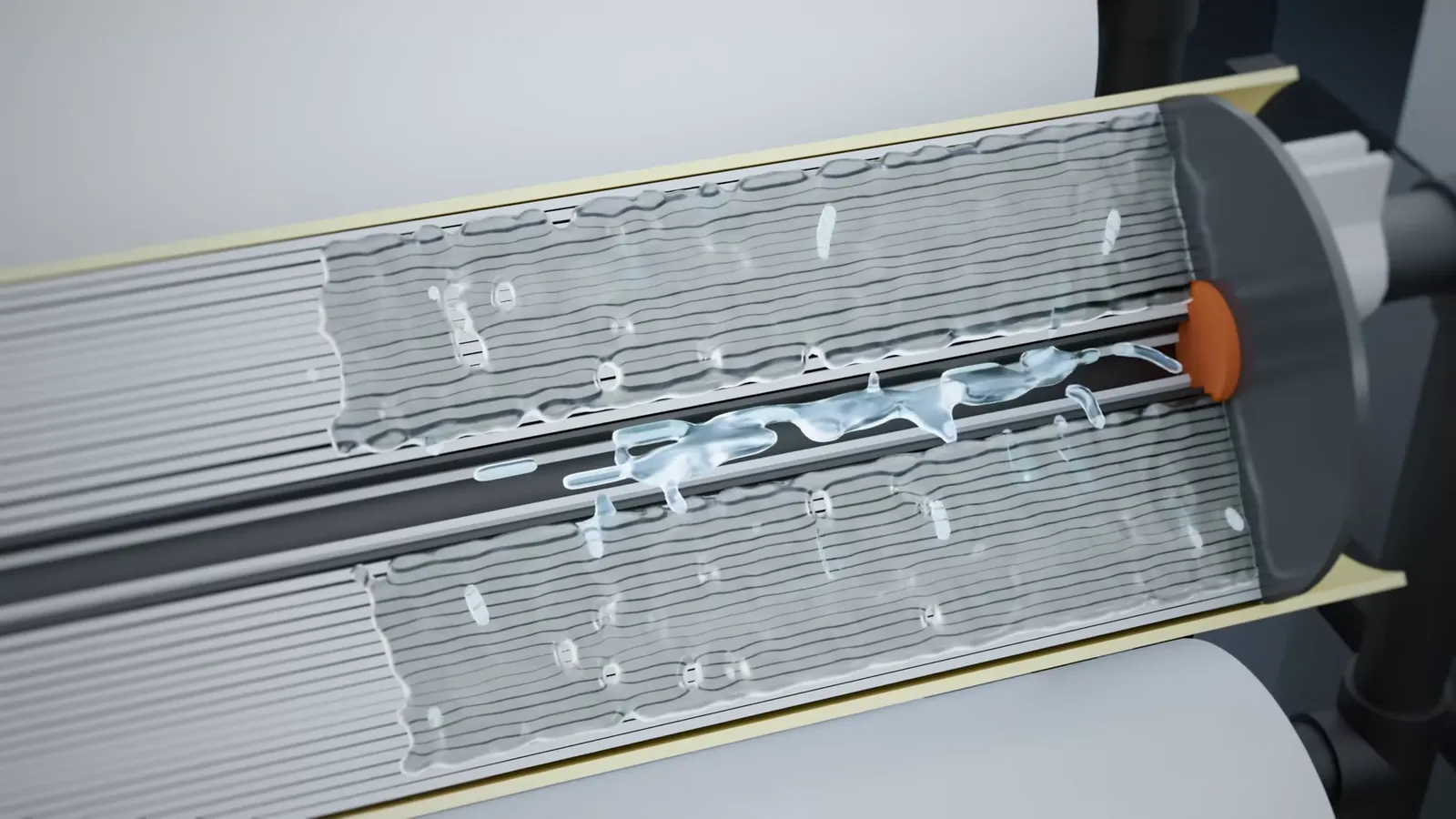
Workflows ranging from industrial production to data infrastructures contain technical layers that are becoming harder to explain. 3D flow animations for complex processes turn these layers into a single visual narrative that progresses over time; the technical team, the sales side and investors start looking at the same picture. This article covers how the method works, where it is used and which steps a production process goes through.
What Is a 3D Flow Animation?
In the business world, processes in fields such as industry, engineering, automation and logistics contain a few more layers every year. Understanding these processes correctly, explaining them correctly and conveying them correctly outside the organisation are among the factors that determine commercial success. This is where 3D flow animations come in as a means of explanation.
A 3D flow animation is a type of technical video that explains the movement, transformation and sequence inside a system through three-dimensional models. Liquid, gas, parts, energy or data: whatever flows inside the system, the animation follows its journey. This is exactly where it differs from static diagrams: a diagram shows a moment, while an animation shows the process.
In this kind of content, the camera often acts like a guide. At the start it shows the system as a whole, then it moves closer to the critical component, takes a cutaway and reveals the internal movement that cannot be seen with the naked eye. Turning engineering data into scenes in this way lies at the heart of industrial animation work.
How Do 3D Flow Animations Speed Up Understanding of Complex Processes?
Three factors make it difficult to explain a complex process: the number of components, the density of terminology and the relationship between time and space. When written documents have to carry all three at once, readers try to build the model in their own minds, and each reader builds a different model. Animation, by contrast, presents the model ready-made, so differences in interpretation largely disappear.
Data on the consumer side also supports this trend. According to Wyzowl's 2026 report, 93% of marketers say video has increased understanding of their product or service, and in the same research the share of people who have watched an explainer video to learn about a product is measured at 96%. In technical sales meetings, the practical counterpart of this rate is a shorter explanation time in the first meeting.
Having a shared visual reference also changes the dynamic of meetings. When the parties try to define the process before discussing it, time melts away; when animation takes on this burden of definition, the agenda shifts directly to the real topics such as capacity, integration and cost. This shared reference is also what allows sales teams to use the same narrative repeatedly in the field; a similar logic applies to 3D product animation prepared for the sales team.
Time, Layer and Sequence
The storytelling power of flow animations comes from a few basic tools. When these tools work together, the process becomes self-explanatory:
Step separation: Each step of the process is explained as a visual section that can be selected on its own.
Time: A cycle lasting weeks is compressed into minutes and becomes watchable, making the process's transformation over time visible.
Layer: The body is made transparent and the movement in the internal volume becomes visible.
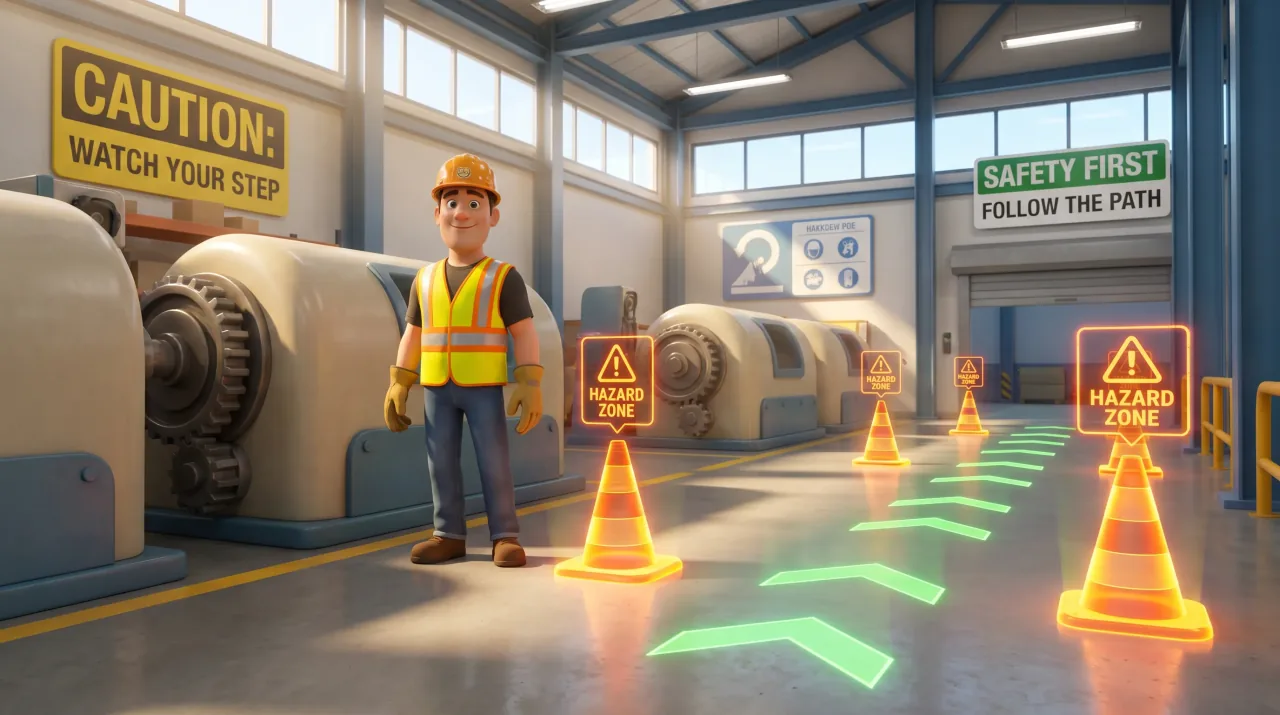
Sequence: Which step triggers which is separated with colour and direction codes.
Scale: Micron-level filtration and a facility-scale line come together within the same narrative.
Shared understanding: All stakeholders, including engineering, sales and management, read the process in the same way.
Thanks to these tools, abstract operations such as a liquid filling cycle on a production line or the circulation of a data packet within a system turn into a story that can be followed. In work that covers the line as a whole, the production line animation approach is preferred to show the dependency between stations in a single shot.
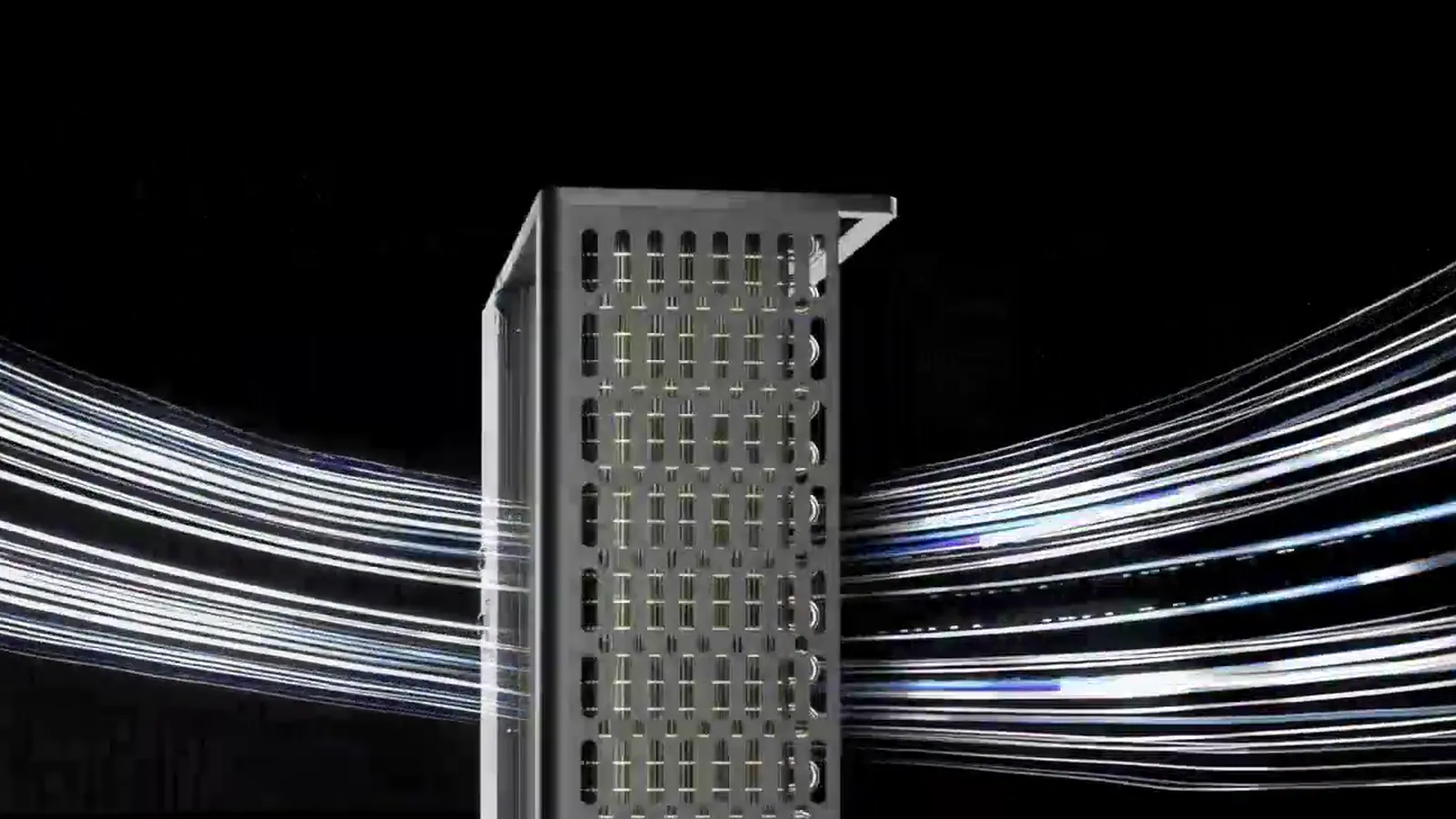
Where Are 3D Flow Animations Used?
The method finds a use in every sector where a movement that is invisible or inaccessible needs to be explained. The areas with the highest demand are:
Industrial production and process lines
Energy generation and distribution systems
Automation, robotics and IoT operations
Logistics, warehousing and order picking operations
Data flow, cloud architectures and IT infrastructures
Water treatment, filtration and chemical dosing systems
What these areas have in common is the need to explain at the table a system that cannot be taken to the field. In projects for the industrial sector, animation is often positioned as a presentation tool that replaces a facility visit. In work that covers the entire facility, a 3D factory simulation setup shows the line layout and material flow together.
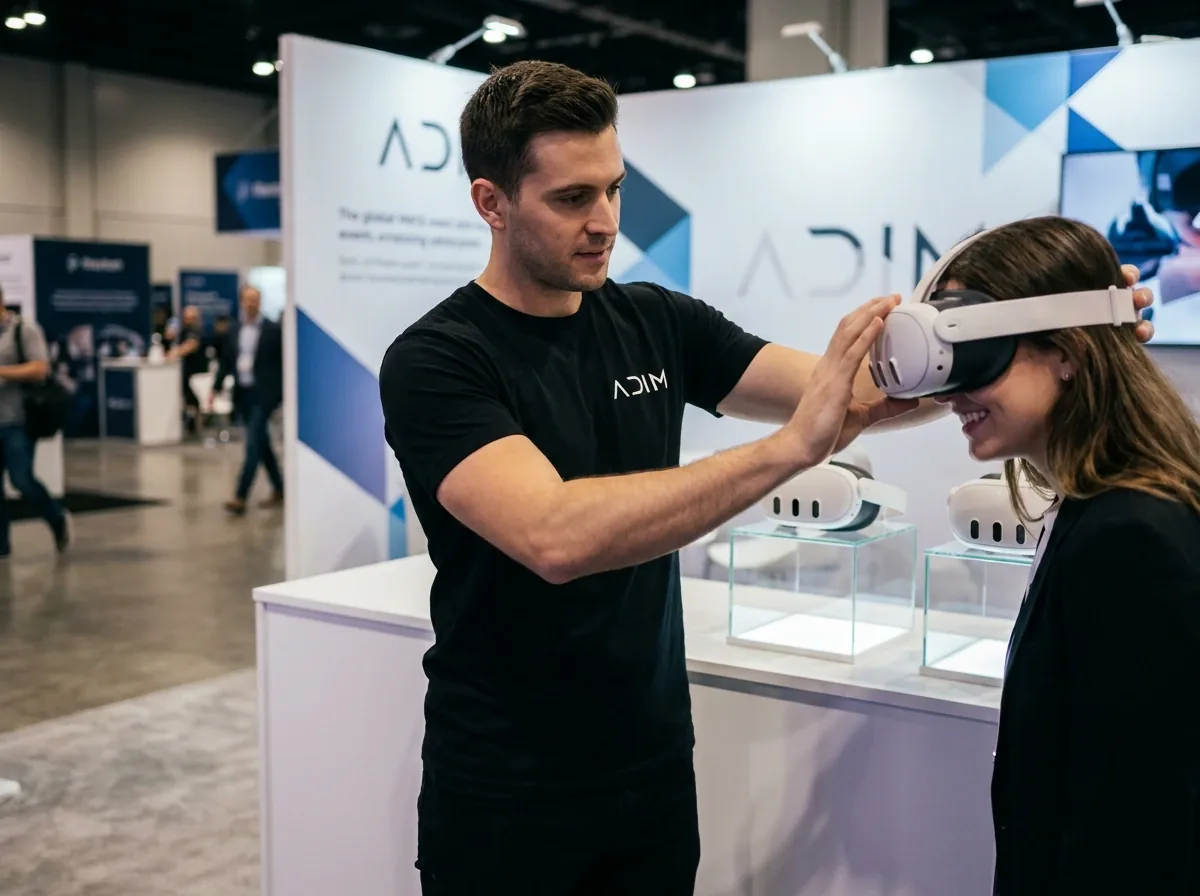
The place of use directly determines the length and rhythm of the edit. A narrative looped at a trade show stand is planned to be watched without sound, while the version uploaded to an internal training portal is built so that it can be paused step by step. This second form of use brings module-based sectioning to the fore in training animation projects.
The Value 3D Flow Animations Add to Corporate Communication
The return on a flow animation is not measured by visual quality alone; the real determinant is how many times the content is used in which department. The benefits the same video brings to different teams are as follows:
Benefit | Description |
Clarity of explanation | Multi-component processes are simplified into a single flow and the terminology load decreases. |
Training efficiency | A resource that can be watched again is created for onboarding new employees and suppliers. |
Sales strength | The system's operation is shown to the customer without the need for a site visit. |
Presentation success | Technical presentations become clearer and more memorable. |
Cost advantage | Misunderstandings and the need to explain again decrease. |
Content lifespan | A modular scene structure allows reuse when the product is revised. |
Content lifespan is the topic discussed most on the budget side. Organising models and scene files in an orderly way makes it unnecessary to produce the video from scratch when a hardware update arrives a year later. Clarifying price-related variables from the outset during budget planning also makes it easier to take this reuse advantage into account.
Which Steps Does a Flow Animation Project Go Through?
The production process follows a flow in which technical data and storytelling decisions progress together. The steps that form the backbone of a project are:
Technical data collection: CAD files, P&ID diagrams, process flow diagrams and dimensions are compiled.
Narrative hierarchy: It is decided which information the viewer should see and in which order.
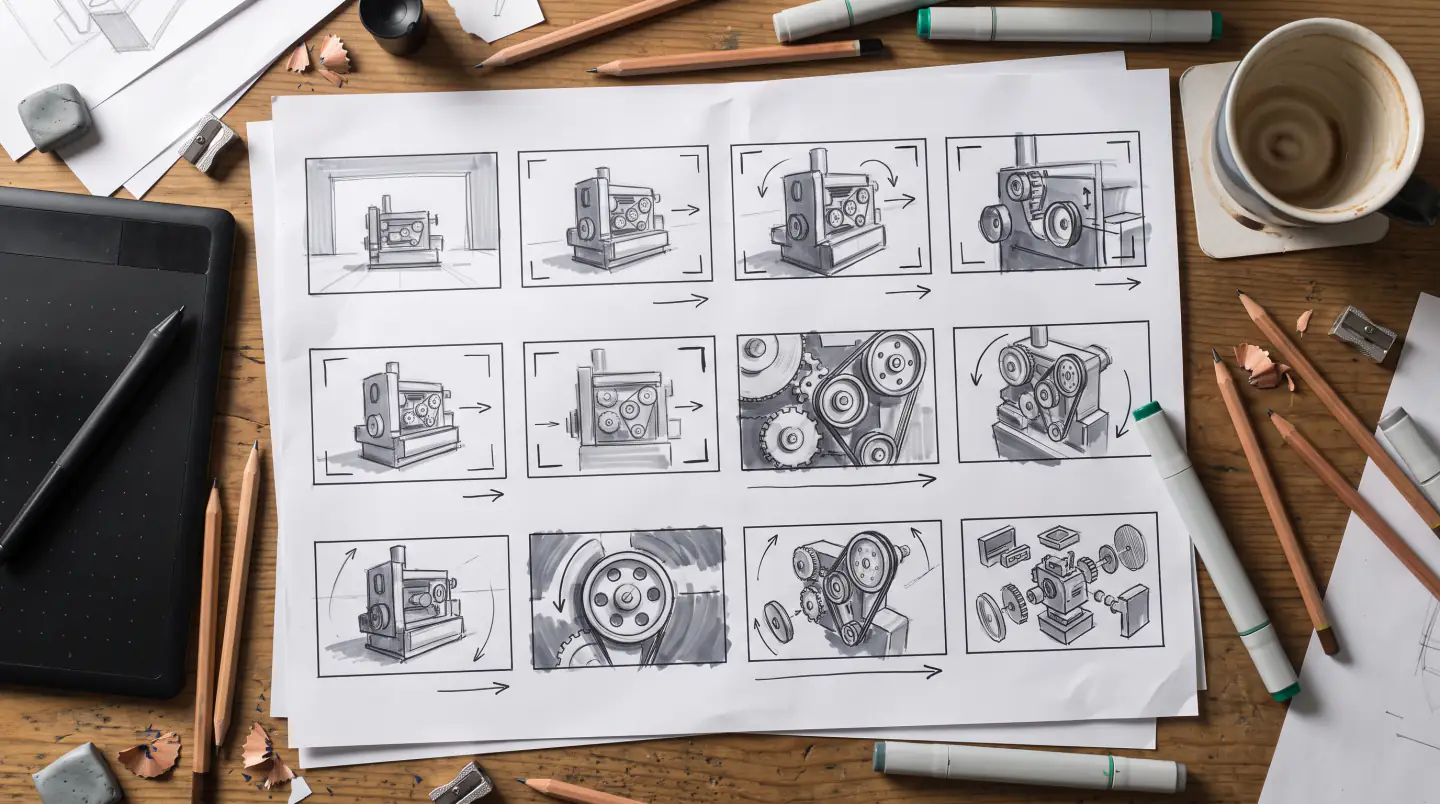
Scenario and storyboard: The scene order, camera moves and cutaway points are clarified on paper.
Modelling and simulation: Geometry is prepared and fluid and particle behaviours are solved.
Lighting, texture and rendering: Material perception and readability are balanced.
Final edit: Text layers, sound design and language versions are put in place.
Two of these steps affect the final result more than expected. Not skipping the storyboard stage so that the scene plan is clarified early noticeably shortens revision rounds. On the closing side, post-production decisions provide the flexibility to produce versions of different lengths and in different languages from the same render set. In explanations dense with technical terms, the use of voiceover is considered a balancing element that reduces the text load on screen.
Example Scenario: Industrial Filtration System
A B2B water treatment company wants to present its newly developed filtration system to an investor. Because the system consists of six stages, including pre-treatment, microfiltration and UV irradiation, explaining it on slides gets stuck in technical detail every time. A 3D flow animation fits these six stages into a single one-minute narrative; each stage is distinguished by its own colour and direction arrows, and the transition points between stages are opened up with cutaway views.
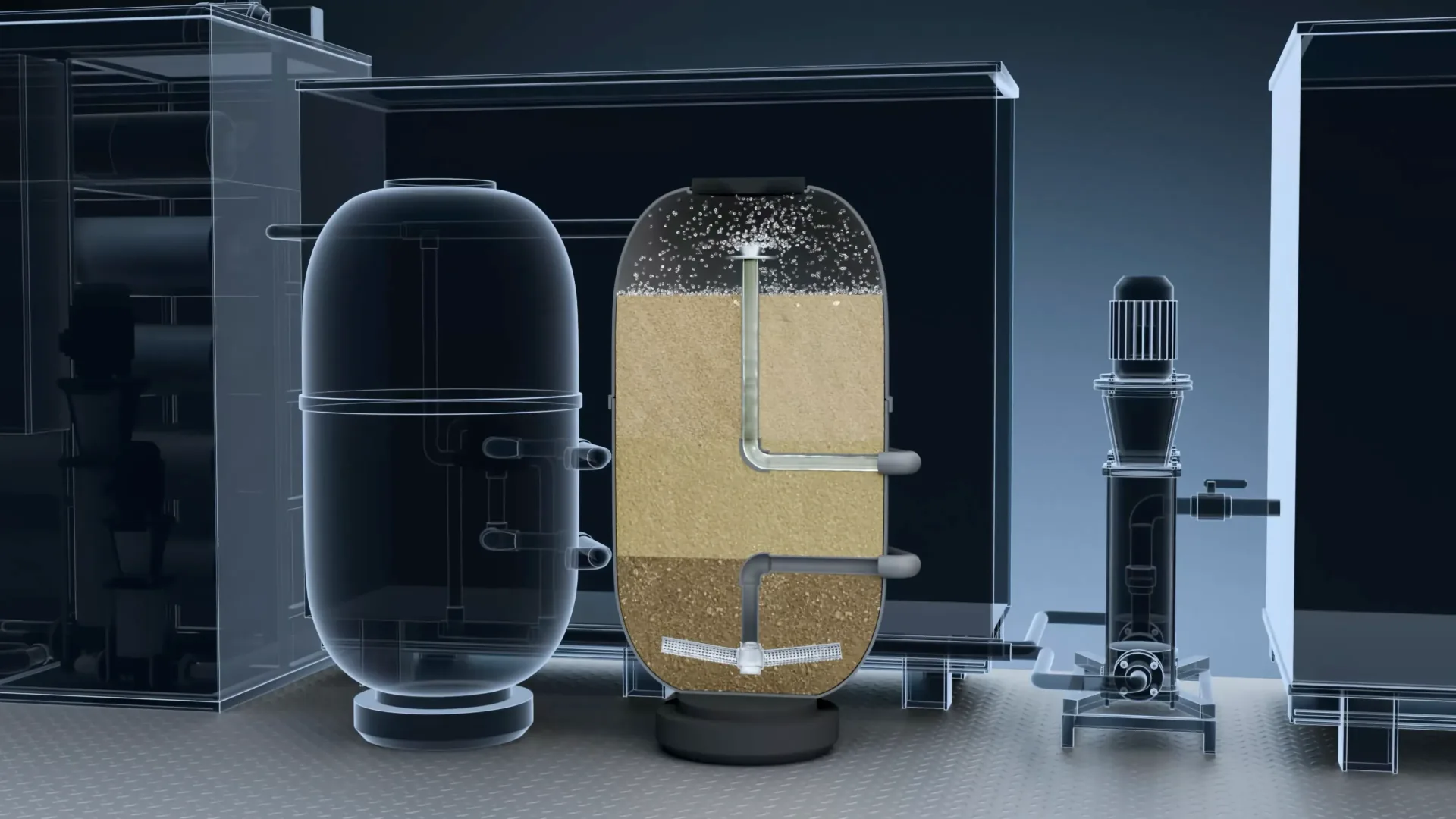
The result comes down to three points: all stages can be followed in a continuous flow, investors outside the technical team grasp the system on first viewing, and the consistency of the visual language strengthens the brand's professional perception. Adapting similar setups to financial presentations is a common approach in 3D animation prepared for investor presentations. The same file can also form the basis of supplier training material for business partners in the field.
On the schedule side, the decisive factor is not render time but data integrity. A missing dimension, an outdated CAD version or a design revision awaiting approval puts the modelling stage on hold. Fixing the technical files in a single version at the start of the project noticeably lowers the cost of corrections made in later stages. Defining the approval flow with the same clarity ensures that it is known from the outset who gives feedback at which stage, and it limits the number of revision rounds.
Aligning the visual language with the corporate identity is also a topic that requires an early decision. Linking the colour palette, typeface and interface graphics to the brand guidelines ensures that the video fits smoothly into the corporate presentation set. The same consistency also allows animations produced in different years to read as a continuation of one another. Creating a shared glossary for the language and terminology of the technical labels that will appear on screen stands out as a practical step that prevents inconsistencies in multilingual versions and in the names used by different departments.
What to Consider When Planning 3D Flow Animation Solutions for Complex Processes?
When planning this kind of narrative, the right edit is shaped by decisions made before production. The technical level of the target audience, the medium where the video will be used and the number of stages to be explained come first among these decisions. In a version for investors, the system as a whole and its outcome come to the fore, while in a version for the maintenance team, the disassembly order of a single module fills the entire screen.
The expected length is just as decisive. A narrative looped on a trade show screen and one uploaded to a training portal are edited at different rhythms, even if they are produced from the same models. That is why it is defined at the brief stage which versions will be requested; otherwise excessive detail and scattered camera work can arise.
The Right Start for Your Project with 3D Flow Animations for Complex Processes
Technical explanation no longer depends on thick documents and dense slide decks. 3D flow animations for complex processes convey the same information with speed, clarity and a consistent visual language, feeding training, sales and investor communication from a single source. The CAD files and process diagrams you already have are enough to form the starting point of this narrative.
If you would like to visualise your product and system explanations with 3D animation, you can get in touch with our team. Starting from your existing technical data, we can define the scope, scene plan and version needs together.
Frequently Asked Questions About 3D Flow Animations for Complex Processes
Which files are needed for a 3D flow animation?
CAD models (STEP, IGES, SLDPRT, etc.), process flow diagrams and dimension information are enough to start in most projects. If there is no CAD model, modelling can be done using technical drawings, photographs and a list of dimensions. However, this additional work may extend the project schedule somewhat.
What is the ideal length of a 3D flow animation?
For investor and trade show presentations, a narrative of 60 to 90 seconds is usually enough. In versions for training purposes, the length may increase according to the number of modules; in this kind of content, short sectioned pieces work more efficiently than a single long video.
Does the flow simulation reflect real engineering calculations?
The fluid behaviour used in animations is a representation for explanatory purposes and does not replace CFD analysis. If validated analysis outputs are available, this data can be carried over as a reference for the animation's visual language.
Can a flow animation be placed inside an existing promotional video?
New scenes can be added to the existing edit. Integrity is preserved by ensuring that the added sections are consistent with the existing video in colour palette, typeface and pace.
Blog
All posts→
Your next project
Let's build
together.