
AI-assisted, fast and scalable video production
VR experiences for trade shows, events and training
Touchscreen kiosk software and hardware
3D hologram display and stage solutions

2D vs 3D Animation: What's the Difference?
Wondering whether to choose 2D or 3D animation? This article breaks down their differences in style, use cases, production, and impact.
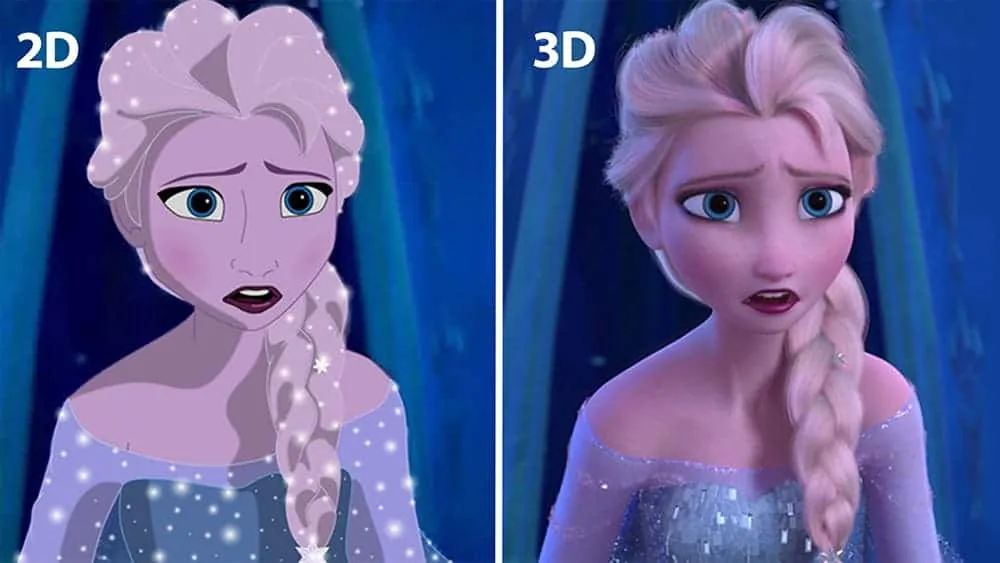
Animation enables brands to reach their target audiences with effective and creative content. The choice between 2D vs 3D animation, the two options encountered most often in this field, affects the narrative language, the production schedule and the budget all at once. In this article, we explain the technical and practical differences between the two techniques, their areas of use and which one is the better fit for which project, from a production perspective.
What Are 2D and 3D Animation?
The difference between the two techniques starts with the number of dimensions in the working space and spreads from there across the entire production chain. 2D animation is built in a flat scene, while 3D animation is built in a digital environment that has depth. This fundamental distinction directly determines the camera's freedom of movement, the behaviour of light, the cost of revisions and which specialisms the team will consist of.
What Is 2D Animation?
2D animation consists of visuals animated on a two-dimensional plane made up of width and height. Characters, icons and scene elements are prepared as drawings or vector graphics; movement is built frame by frame or with keyframe logic. In work where the narrative is built on abstract concepts, data flows and process diagrams, this technique delivers fast results. Cartoon animation productions can follow the same logic.
Common areas of use are:
Explainer and promotional videos
Training and onboarding content
Short-format pieces for social media
Logo and interface animations
Infographic and data visualisation scenes
What Is 3D Animation?
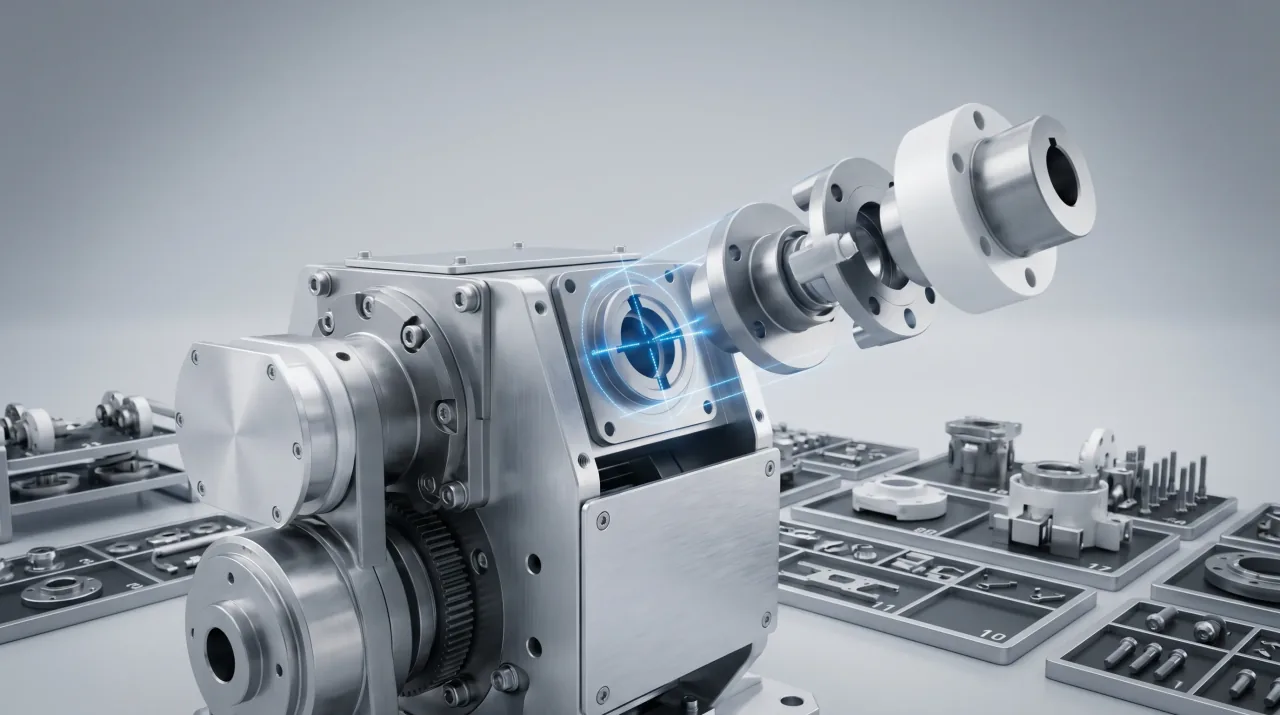
3D animation is the animation of digital models with width, height and depth in a virtual scene. Objects are modelled, materials are assigned to their surfaces, the scene is lit and the virtual camera is positioned at the desired angle. The internal structure of a product, the working principle of a machine or an assembly sequence can be shown with this technique through cross-sections and transparency effects.
Frequently encountered areas of use are:
Product presentations and exploded-view scenes
Architectural visualisation and site layout explanations
Industrial process and machine simulations
Technical presentations, trade show screens and dealer training
Cinematic brand films
Comparison Table: 2D vs 3D Animation
The differences between the two techniques are evaluated not only by their visual results but also by criteria such as the production process, revision flexibility and how reusable the content will be in the future. These factors, which are decisive in project planning, show how 2D and 3D animation respond to different needs:
Feature | 2D Animation | 3D Animation |
Visual Style | Flat, drawing-based | Deep, volumetric and realistic |
Production Process | Relatively shorter | More detailed and longer |
Cost | Generally more affordable | Rises with complexity |
Software Tools | After Effects, Illustrator, Toon Boom | Blender, Cinema 4D, 3ds Max, Unreal Engine |
Area of Use | Social media, education, simple explanations | Industrial promotion, technical presentations, trade shows |
Level of Realism | Stylised and simple | Close to photorealism |
Camera Movement | Panning and scaling within the plane | Free orbit and angle within the scene |
Revision Flexibility | The drawing layer is reworked | Changed by re-rendering angle and lighting |
Reuse | Scene-based, partial | Models are reused in new videos |
Where Do the 2D and 3D Animation Production Processes Diverge?
The brief, script and storyboard stages work similarly in both techniques; the divergence emerges at the point where the visuals start to be produced. On the 2D side, the weight of the effort shifts to drawing and motion design, while on the 3D side it shifts to modelling, texturing and render computation. This distribution determines how the schedule is structured and at which stage revisions are gathered.
The Production Flow on the 2D Side
2D production begins with moodboard work in which the visual style is defined. Characters, icons and backgrounds are then prepared as vectors. In the motion stage, these layers are animated on the timeline and transitions and rhythm are built. Because revision requests are usually handled layer by layer, frequent interim deliveries can be made throughout the process. In post-production, the final stage, sound, subtitles and editing are completed and the animation is made ready for release.
The Production Flow on the 3D Side
3D production opens with technical drawings or CAD data being turned into a model. Materials are assigned to the model's surfaces, the scene is lit, camera movements are planned and animation keys are placed for the moving parts. Because the render stage depends on computing power, it forms a separate item in the schedule.
How Do You Balance Cost and Schedule?
A common simplification in budget comparisons is the assumption that the 2D technique is more economical under all conditions. In reality, the main variable that determines cost is not the technique but the number of scenes and the level of detail. A 2D narrative with many original scenes can require more effort than a 3D piece in which a single product model is shown from different angles. On the 3D side the initial investment is heavy; in return, once the model has been built, new campaigns, variant presentations and dealer content are produced from the same asset.
Which One Should Be Chosen When?
The right choice has more to do with the nature of the subject being explained than with the aesthetics of the format. If what the viewer needs to picture is a concept, 2D is understood with less resistance; if it is a physical object or space, 3D is. Scenarios that show how the differences between 2D and 3D animation can be weighed at the decision stage are:
If an abstract service model or a software flow is being explained, a 2D narrative provides sufficient clarity.
If the internal structure, assembly or working principle of the product is to be shown, 3D comes to the fore in product animation.
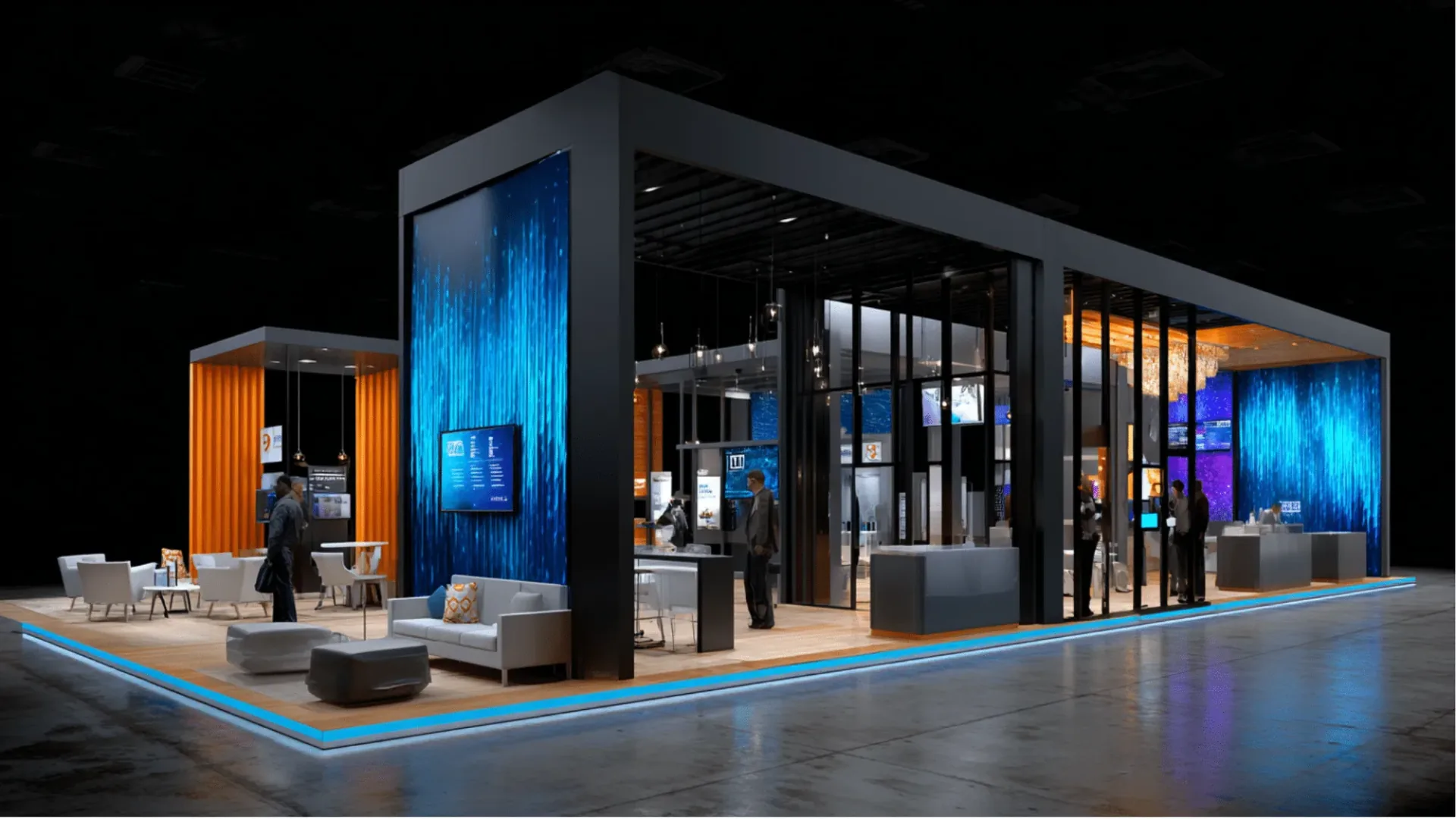
If you need to attract attention from a distance at a trade show booth, 3D scenes are stronger in trade show animation applications.
For staff onboarding or procedure training, the 3D animation in educational content approach and 2D diagrams are considered together.
If product detail is to be highlighted in an e-commerce storefront, 3D animation can be preferred.
Four Criteria That Stand Out at the Decision Stage
Alongside scenario-based evaluation, there are four basic criteria that speed up the decision in practice. These criteria are read in terms of the speed of the narrative, the expectation of realism, the budget limit and the viewing environment. In most projects, the point where two of them intersect settles the choice directly:
If a fast and simple explanation is needed: 2D animation carries the message in full on a short schedule and stays open to interim revisions.
If a realistic product presentation is to be made: 3D animation conveys material texture and the sense of scale almost photographically.
If the budget is limited and the message comes first: 2D animation keeps the scope under control without compromising the clarity of the narrative.
If it will be shown in professional settings such as a trade show or a client presentation: 3D animation keeps its impact on a large screen and at a distance.
Perception Differs as Much as the Technical Details
3D animation creates a perception of quality and high production value in the viewer; for technical products, it feeds the sense of trust that accompanies the purchasing decision. 2D animation, on the other hand, offers friendly, explanatory and accessible communication; it is an advantage when a complex service needs to be simplified. According to industry data, 89 percent of businesses use video as a marketing tool, and explainer videos remain the most common format. At this density, what makes a video stand out is less the format itself and more how well the narrative suits the target audience. Reading the need correctly and choosing the format accordingly also directly affects the video's return on investment. Voice-over, music and sound design can also change this perception markedly.
Hybrid Productions That Use Both Techniques Together
The often-overlooked side of the 2D vs 3D animation comparison is that the choice does not have to be a strict selection between the two. A set-up frequently seen in practice is showing the product with 3D scenes while supporting the conceptual sections with 2D graphics. When flow diagrams, ratio indicators and data layers are added as flat graphics in a technical machine video, the narrative stays both realistic and understandable. This approach raises information density without increasing the render load of the 3D scenes and makes it easier to reuse the video as short excerpts across different channels.
The Deciding Criterion in Choosing Between 2D vs 3D Animation
Choosing between 2D vs 3D animation is not a ranking of technical superiority but a question of which language the subject settles into with less resistance. Concepts, process diagrams and service models quickly become clear in a flat narrative; physical products, machines and spaces, on the other hand, remain incomplete without a sense of depth. Budget, schedule and the need to reuse the content later are the three criteria that complete this decision. A well-structured brief also noticeably shortens revision rounds because it settles the format from the outset. Whatever the technique is called, what matters is that the message reaches the target audience in the most effective way. Get in touch with us so that we can determine the most suitable animation solution for you together.
Frequently Asked Questions About 2D vs 3D Animation
Can 2D animation be converted to 3D later?
A direct conversion is not possible; the two techniques work on different file structures. The scenes are rebuilt in a 3D environment while preserving the design language, colour palette and narrative flow of the 2D scenes. For this reason, if there is a long-term content plan, choosing the right format in the first project lowers the cost of the second production.
Does visual consistency suffer if the same brand uses both 2D and 3D?
Consistency is maintained when the colour palette, typography and rhythm of motion are defined in a single guideline. In practice, the viewer notices not the technical difference but a disconnect in the narrative language. For this reason, in projects where the two formats are used together, a shared style framework is defined from the outset.
In which technique is it easier to request revisions?
At an early stage, 2D is more flexible; the drawing layer can be reworked directly. On the 3D side, changes to camera angle, lighting and materials are relatively easy once the model has been built, whereas changes to the model itself require more effort. For this reason, approvals in 3D projects are gathered at the storyboard stage.
Which animation technique makes more sense for a small brand to start with?
If the subject to be explained is not a physical product, starting with 2D keeps the scope under control. If product promotion is the goal, building a single model and using it in several videos balances the initial 3D investment over time. The decision is made by looking at a one-year content plan as much as at the short-term budget.
Blog
All posts→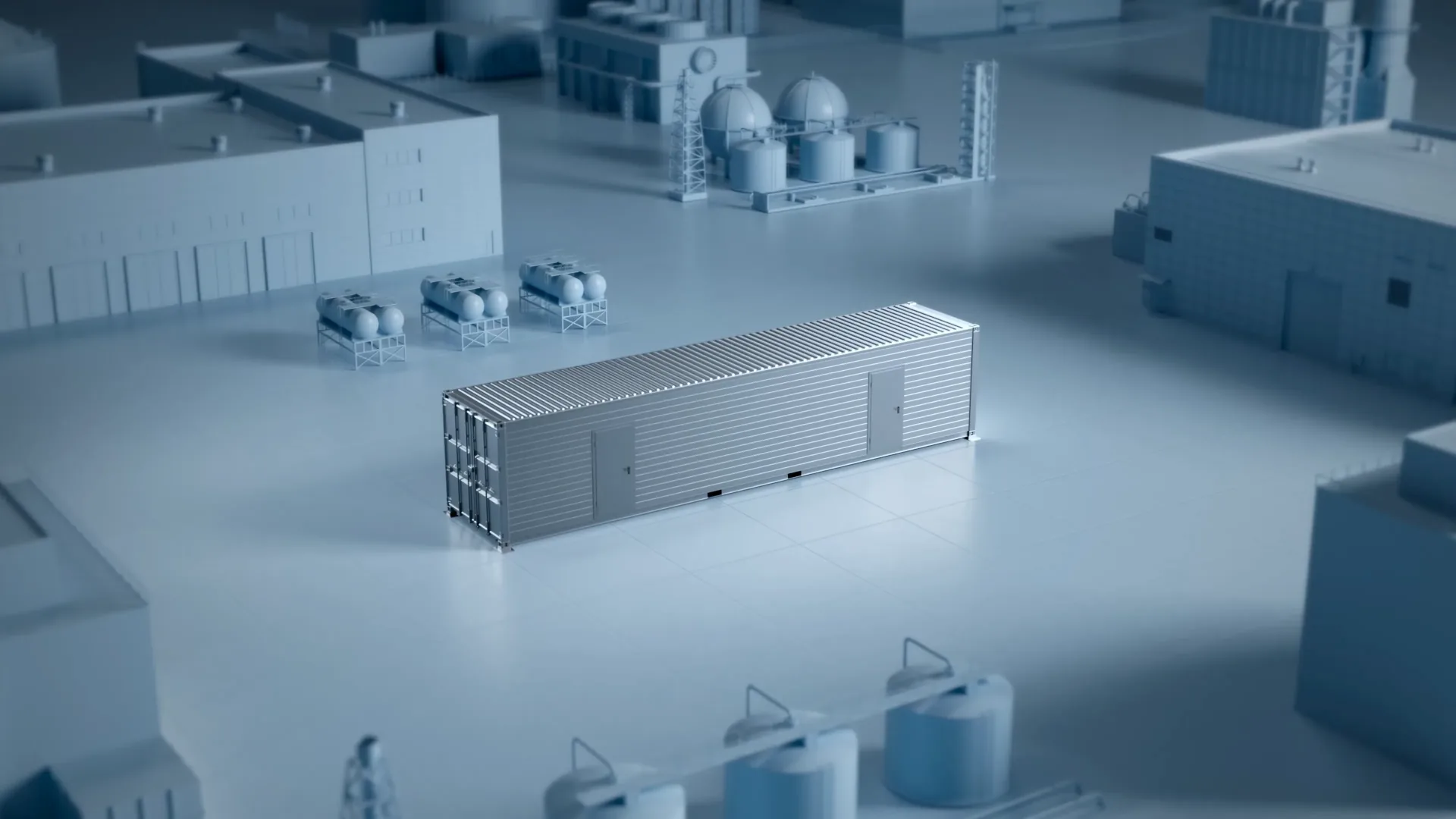
Your next project
Let's build
together.