
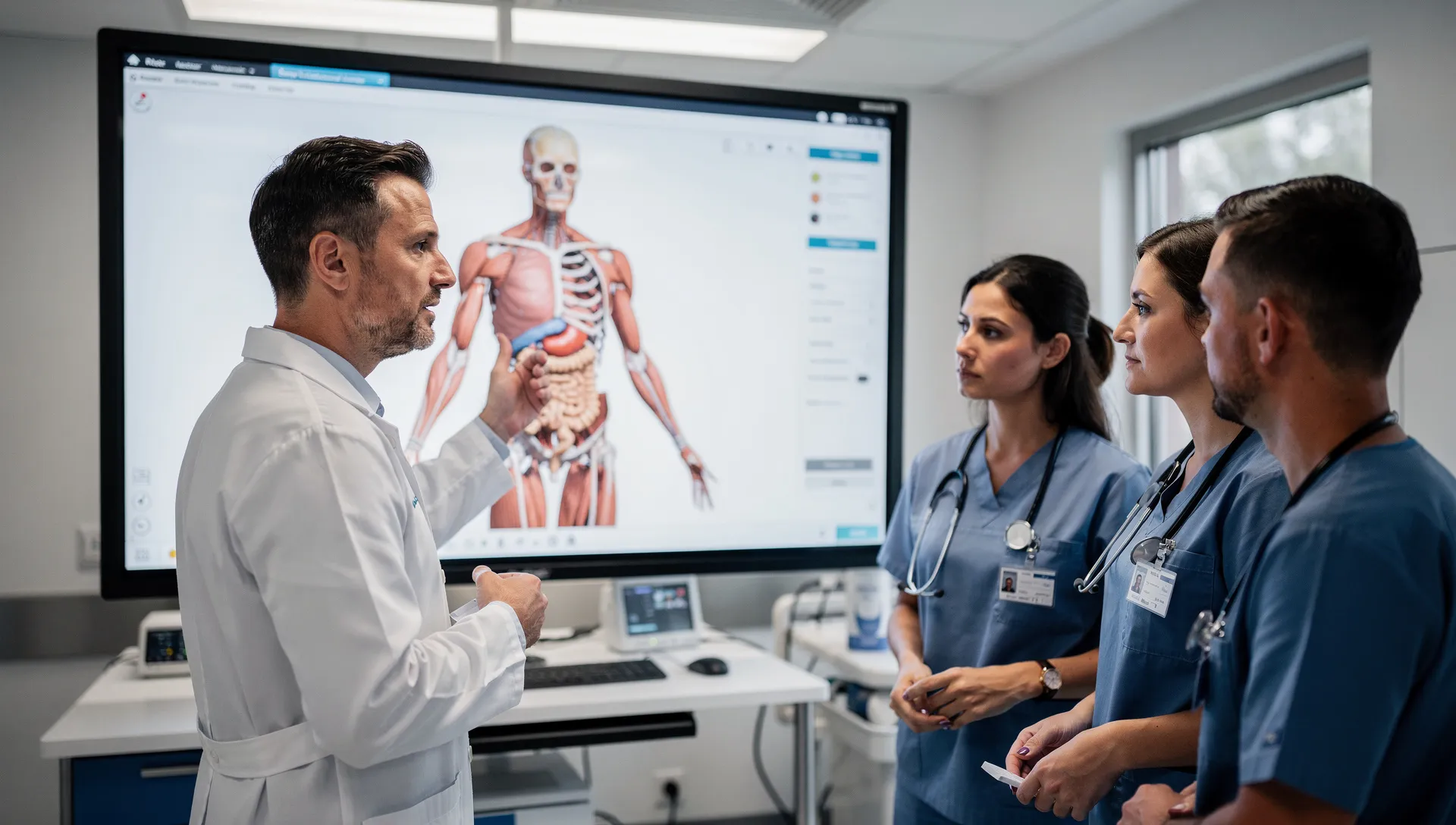
How to Create Medical Training Videos
This article explains how medical training videos should be planned, focusing on scientific accuracy, instructional design, visual storytelling, and technical quality.

ADIM Blog
13 January 2026 | 2 Minute Reading
Medical training videos are among the most effective digital tools for helping healthcare professionals learn complex medical information quickly and accurately. However, creating truly effective medical education videos requires more than just recording content it demands scientific accuracy, instructional design, and professional visual storytelling.
The Core Purpose of Medical Training Videos
The main goal of medical training videos is to connect theoretical medical knowledge with clinical practice. Video-based learning allows physicians to absorb information efficiently despite limited time.
Key objectives include:
Simplifying complex topics
Supporting visual memory
Improving long-term knowledge retention
Content Planning and Script Development
A successful medical training video begins with a well-structured plan. The sequence, depth, and learning objectives of the content must be clearly defined.
For an effective script:
Clearly identify the target audience
Define learning outcomes
Structure content with a clear beginning, middle, and conclusion
All information should be evidence-based and aligned with current medical guidelines.
The Importance of Visuals and Animation
Visuals are at the heart of medical training videos. Topics such as anatomy, surgical procedures, and drug mechanisms become significantly clearer when supported by animation.
Effective visual tools include:
3D anatomical animations
Surgical procedure simulations
Cellular and molecular-level explanations
Language, Narration, and Voiceover
The language used in medical training videos must match the expertise level of the audience. For physician-focused content, terminology should be precise but not unnecessarily complex.
Best practices include:
Clear and fluent narration
Professional voiceover
Strong synchronization between visuals and script
High-quality narration significantly enhances perceived video quality.
Technical Quality and Production Standards
Even the best medical content loses impact if technical quality is poor. Professional production standards are essential.
Critical elements include:
High-resolution video
Clean, balanced audio
Smooth editing and transitions
Platform Compatibility and Accessibility
Medical training videos should be optimized for e-learning platforms, hospital training systems, and online academies. They must perform well across different devices.
This ensures:
Broader accessibility
Easier repetition and review
Higher institutional training standards
Conclusion
Medical training videos deliver maximum value when strategic planning, scientific accuracy, professional visuals, and strong production quality come together. This approach transforms medical education into an efficient and engaging learning experience.
If you want to enhance your medical training video production with professional video and medical animation solutions, feel free to contact us to get started.
Let's Elevate Your Brand Together
Our experienced team is here to support you in your animation and visualization projects.